Showing posts with label reading. Show all posts

Sunday, May 25, 2025

Update from August 2023 to May 2025

 The last time I wrote was August 2023 - two months after I became the Associate Director of Gammelgården Museum. Between then and now, I have become the Executive Director of the museum (since January 2024). 

These 21 months have been exciting, challenging, and rewarding. I've had opportunities to oversee the historic restoration of a 1930s building, revamp the way the museum presents exhibits, improve the way artifacts are stored, began the digitization of the museum's collection by using a collections management system that not only benefits the museum, but that the public can see on MNCollections.

We have had many major community events that have grown in size from a couple hundred of people in 2023 to over 1,000 people in 2024. Our Season Opening Day this year had over 960 people - up from about 250 last year. 

The number of staff and interns are increasing which enables us to accomplish even more. 

With all of the good, though, comes the loss of balance and free time. I have struggled with trying to find the things that I once enjoyed - photography, gardening, quilting, and having enough time to spend with my family. My goal is to get my life in better balance during the 2025 season. 

Below are some photos that I have taken recently. I've taken more photos on my camera which I have yet to download to my computer. There's not enough time it seems. 

At any rate, here are some photos that represent my life over the past year.

I have been photographing artifacts at the museum so we have a digital record of each one that staff and volunteers can use plus the public can see. Below is a courting candleholder. 


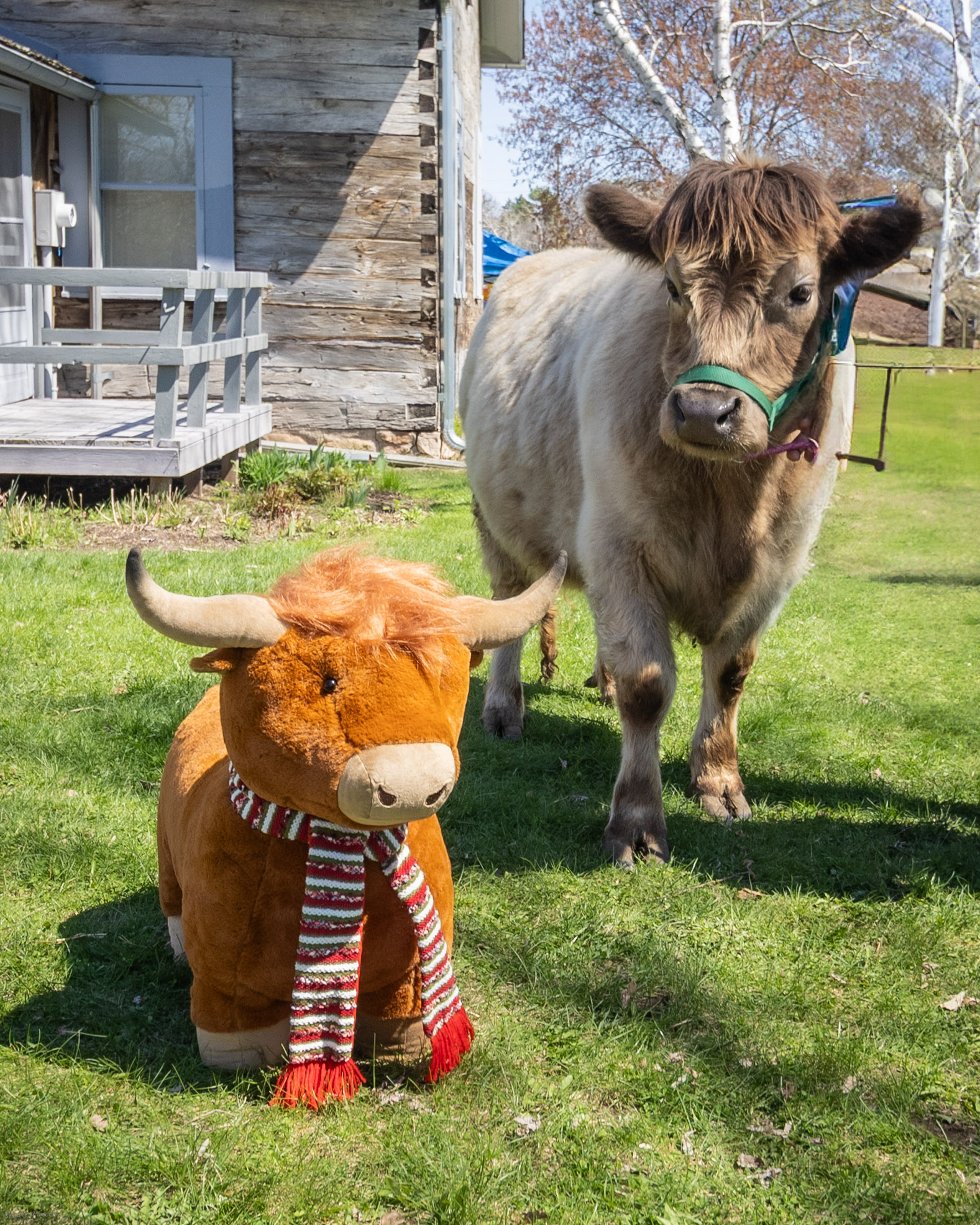
At the museum's Season Opening Day, we had farm animals from Little Blue's Traveling Zoo. This is Melvin. He's a Scottish Highland Cow. The stuffed cow is something that we bought for the museum as one of our mascots. This breed of cow is the only one that legally can be kept outdoors during the winter in Sweden. 


One of the things that is important to me is providing training opportunities for tour guides. Below is the meeting in April with our returning and new tour guides. It's in the classroom where the main exhibit is shown (which was still being installed at this point).


Scandia Fire & Rescue held a fire extinguisher training so tour guides and staff could get experience with using them. 


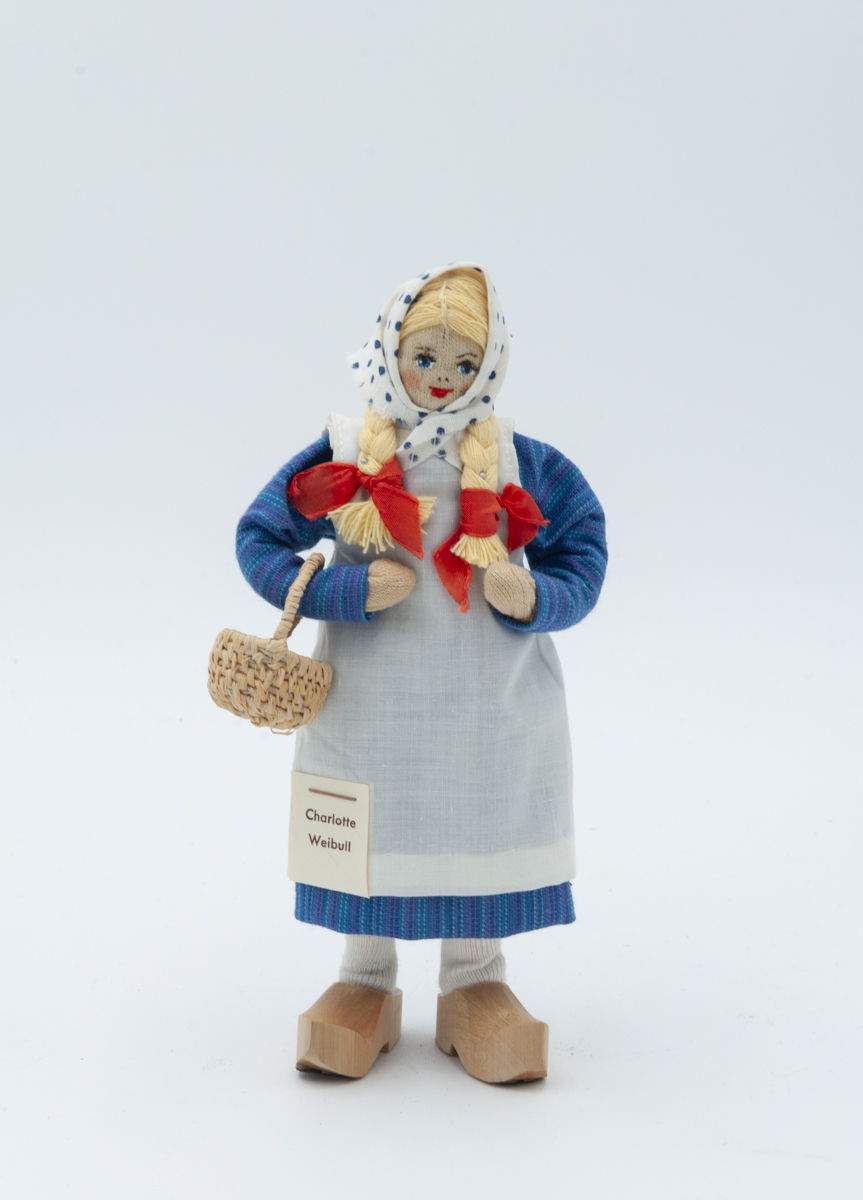
Here's another item in the museum's collection that I photographed. It is one of hundreds of Charlotte Weibull dolls in the collection. These are all handmade dolls, some representing different provinces in Sweden.


During January through April 2025, I was photographing and entering information about artwork and other artifacts into CollectiveAccess. This had never been done. Now, we have over 660 items in the collection that are in the database. This is just a fraction of what we have. I was told we had about 3,500 items. 

In doing this project (along with another co-worker), over 37% of the items entered were not accessioned prior to my start as the Associate Director/Executive Director - which means information about the item was never recorded. So, we have no idea how the piece was acquired or any history about it. 


In March, I drove to Kansas for an open-air museum conference which was informative and relevant to what I am doing now. One of the classes I enjoyed taking was about historic shoes. This is a sampling of shoes and tools that were used to make and repair them.


This photo shows how the soles of shoes were attached to the vamps/uppers - by pegs. These are all little wooden pegs that went around the perimeter of the shoe.


Another class I attended at the conference related to condiments used in the 1800s. 


During the conference, there was an opportunity to visit the Arabia Steamboat Museum which was a fascinating museum. This is one of the pairs of shoes that were restored and are on display. During our visit, we had the opportunity to go behind the scenes to see the restoration and cold storage areas. They are still working on the hundreds of artifacts that are in cold storage. 
 

Part of the open-air museum conference was held at Mahaffie Stagecoach Stop in Olathe, Kansas. It's a nice facility with well-presented exhibits. I particularly enjoyed seeing the farm animals, including this sheep. 
 

I also had the opportunity to visit the Harry S. Truman Presidential Library. Not having ever visited a Presidential Library, I didn't know what to expect. The exhibits were fascinating and I learned a tremendous amount while there. 


Back at the museum, I was purchasing items for the current exhibit, including this print of a watercolor by a Swedish artist. 


In March, Sophia and I took care of my grandnieces for a couple of weekends. We had some craft projects for them to work on which they enjoyed doing. 


We took them to the museum. I was surprised to hear they had never been to a museum, so this was a good experience for them to see what one was like. Maya enjoyed the wool processing exhibit. 


We taught the girls how to make pancakes. Maya learned how to crack an egg which she was proud about doing.


We played games with the girls as the dogs, Danny and Ellie, wanted to be a part of the action. 


We visit the St. Croix River. There was still ice on part of the river (look to the right of the photo). Surprisingly, there were people already fishing on the section with open water.


In February, I went to Karpeles Manuscript Library on my way to Grand Marais. I had never been to this museum and it was well worth the stop. There were documents and images that have been collected by a family that are being shared with the public. This one was from Martin Luther King, Jr.


Karpeles also had a display about historic telephones. This one was an unusual one.


In Grand Marais, I took a class about Swedish embroidery. I was impressed with this 3D installation that was done by various art/education instructors - each depicting a different craft or skill taught at North House.


My hotel room faced Lake Superior and one morning there was smoke coming off the water. It was beautiful.


During the embroidery class, we made pouches that could hold embroidery tools - scissors, needles, pins, and a small project. My project is on the far right - the purple one. 


One of the projects that I am happy about is the non-lending resource library that we created at the museum. There were literally hundreds of books that were never accessioned into the collection. If they are not historic or fragile, they were put in this library for the public to browse and read. Some of the books are in English and others in Swedish. 


I also created a Board and Card Game Library - something that is new to the museum and community. People can come to the museum to play a game. The goal is to get away from technology and do something fun with friends and/or family.


Here's another piece I purchased for the museum. It is over six feet tall and is all hand-felted. It's two birch trees which are significant to both the Ojibwe and Swedish immigrants who lived in this area. 


Winter always seems to offer stunning sunsets. 


This is Ellie with the girls at Christmas 2024. She is our newest dog after multiple and unexpected deaths of pets from 2022 through 2024 (Scooby - November 2022 from some type of weird bacterial/viral infection that got progressively worse; Aspen - December 2023 went in for surgery to remove three masses. When she was recovering from surgery, she was anxious and doing a lot of panting, and - to make a long story short - developed a twisted stomach which was too far along by the time we got her to an emergency hospital, and Cooper January 2024 from Hemangiosarcoma - a type of cancer that only dogs get. No one knew he had it - us or the vet).


On a more positive note, this is what the museum's second floor looked like at Christmas. This exhibit had lots of different mini-themes that showed what the holidays in Sweden look like. The tables are set for the Luciadagen breakfast that was served after the program in the Old Church. 


From August 2024 to March 2025, we had kitten - Juniper - who we rescued from being outdoors. She was by herself, tiny, and hungry. She lived with us and had an active and full life until the last week in March. She developed a neurological condition that would have severely impaired her life. Her condition appeared almost as if she had a stroke. The emergency vet said she would have had seizures for the rest of her life, be unable to walk steadily due to issues on her left side, etc. It was devastating. 


The girls and a couple of their friends doing the annual puzzle competition at the museum.


Sophia brought Olivia her birthday cake to celebrate her 22nd birthday.


Sophia helped serve food for a volunteer and member appreciation event at the museum in January 2025.


My sister and nephew were at the volunteer and member appreciation event. 


This was Juniper at Christmas 2024. She received gifts...just like everyone else did. She loved playing with the crumpled-up paper.


Danny was intrigued with the gifts at Christmas. His favorite gift was the one for him: dog treats!


Sophia helped at the coffee parties at the museum. I appreciated her help during the busy holiday season. 


Just a final photo of Olivia with Maya and Emma plus Melvin the Scottish Highland Cow who, interestingly, was afraid of the stuffed Scottish Highlight Cow. 


And...there we have it. An update from August 2023 to May 2025. Certainly this didn't include everything that happened, but it was a glimpse into this period of time. 


Tuesday, October 11, 2022

Bittersweet - Book Notes

A few months ago, the pastor at church had mentioned a book he read while on sabbatical called Bittersweet - How Sorry and Longing Make Us Whole by Susan Cain. His sabbatical focused on grief and loss, so I was curious to check this book out of the library and see what it was about.

Although there were some parts that resonated with me, the majority of the book seemed like it was meant for someone else. I did find the section about how creativity can be associated with sorrow and longing particularly interesting. 

At any rate, here are the parts that were most interesting to me: 

- Humans are wired to respond to each other's troubles with care. This instinct is as much a part of us as the desire to eat and breathe.

- Sad moods tend to sharpen our attention: They make us more focused and detail-oriented; they improve our memories, and correct our cognitive biases. 

- What if we took whatever pain we couldn't get rid of, and turned it into something else? We could write, act, study, cook, dance, compose, do improv, dream up a new business, and decorate our kitchens; there are hundreds of things we could do, and whether we do them "well," or with distinction, is beside the point. This is why "arts therapy" - in which people express and process their troubles by making art - can be so effective, even if its practitioners don't exhibit their work on gallery walls. 

- Whatever pain you can't get rid of, make it your creative offering - or find someone who makes it for you.

- Min Kym, a famous violinist, had her violin stolen. "The moment my violin was stolen, something died in me....I have to accept that the person I was with the violin gone. But I've been reborn....There's space now for a new me to emerge....When you do recover from any loss - when you heal, when your soul starts to heal from the shock - a new part grows." 

- In our house, getting into a good college was the holy grail. My mother dreaded my departure, but even more she desired my success.

- May I be free from danger, May I be free from mental suffering, May I be free from physical suffering, May I have ease of well-being.

- May I be safe, May I be happy, May I be healthy, May I live with ease. 

- A mother who developed Alzheimer's kept saying to her daughter, "I just want you to know what a good daughter you've been. I just want you to know." She would say this every single time the daughter called and visited. I won't be able to tell you much longer, so please remember how much I love you. A good daughter, a good daughter, you've been such a good daughter." 

Saturday, October 8, 2022

The World According to Mister Rogers - Book Notes

 Recently I came across two books by Fred Rogers at the library. The first one I read is The World According to Mister Rogers - Important Things to Remember. It's a short book, yet one filled with a lot of wisdom and things to reflect upon. Below are some of my favorite passages from the book. 

- Some days, doing "the best we can" may still fall short of what we would like to be able to do, but life isn't perfect - on any front - and doing what we can with what we have is the most we should expect of ourselves or anyone else. 

- It takes strength to face our sadness and to grieve and to let our grief and our anger flow in tears when they need to. It takes strength to talk about our feelings and to reach out for help and comfort when we need it. 

- Who you are inside is what helps you make and do everything in life. 

- Solitude is different from loneliness, and it doesn't have to be a lonely kind of thing. 

- You rarely have time for everything you want in this life, so you need to make choices. And hopefully, your choices can come from a deep sense of who you are. 

- All life events are formative. All contribute to what we become, year by year, as we go on growing. As my friend the poet Keneth Koch once said, "You aren't just the age you are. You are all the ages you ever have been!"

- I believe it's a fact of life that what we have is less important than what we make out of what we have. The same holds true for families. It's not how many people there are in a family that counts, but rather the feelings among the people who are there. 

- To love someone is to strive to accept that person exactly the way he or she is, right here and now. 

- It always helps to have people we love beside us when we have to do difficult things in life. 

- Mutually caring relationships require kindness and patience, tolerance, optimism, joy in the other's achievements, confidence in oneself, and the ability to give without undue thought of gain. 

- Each one of us contributes in some unique way to the composition of life.

- I believe that infants and babies whose mothers give them loving comfort whenever and however they can are truly the fortunate ones. I think they're more likely to find life's times of trouble manageable, and I think they may also turn out to be the adults most able to pass loving concern along to the generations that follow after them. 

- You bring all you ever were and are to any relationship you have today. 

- Imaging something may be the first step in making it happen, but it takes the real time and real efforts of real people to learn things, make things, turn thoughts into deeds or visions into inventions.

- There is no normal life that is free of pain. It's the very wrestling with our problems that can be the impetus for our growth. 

- As human beings, our job in life is to help people realize how rare and valuable each one of us really is, that each of us has something that no one else has - or ever will have - something inside that is unique to all time. It's our job to encourage each other to discover that uniqueness and to provide ways of developing its expression.

- Anyone who does anything to help a child is a hero to me. 

- We want to raise our children so that they can take a sense of pleasure in both their own heritage and the diversity of others. 

- When you combine your own intuition with a sensitivity to other people's feelings and moods, you may be close to the origins of valuable human attributes such as generosity, altruism, compassion, sympathy, and empathy. 

- Spend one minute thinking of someone who has made a difference in the person you have become. 

-As you play together in a symphony orchestra, you can appreciate that each musician has something fine to offer. Each one is different though, and you each have a different "song to sing." When you sing together, you make one voice. That's true of all endeavors, not just musical ones. Finding ways to harmonize our uniqueness with the uniqueness of others can be the most fun - and the most rewarding - of all.

- Who in your life has been such a servant to you...who has helped you love the good that grows within you? Let's just take ten seconds to think of some of those people who have loved us and wanted what was best for us in life - those who have encouraged us to become who we are tonight - just ten seconds of silence. 
    No matter where they are - either here or in heaven - imagine how pleased those people must be to know that you thought of them right now. 
     We all have only one life to live on earth. And...we have the choice of encouraging others to demean this life or to cherish it in creative, imaginative ways. 

- If you could only sense how important you are to the lives of those you meet; how important you can be to the people you may never even dream of. There is something of yourselves that you leave at every meeting with another person. 

- Whether we're a preschooler or a young teen, a graduating college senior, or a retired person, we human beings all want to know that we're acceptable, that our being alive somehow makes a difference in the lives of others.

- The real issue in life is not how many blessings we have, but what we do with our blessings. Some people have many blessings and hoard them. Some have few and give everything away. 

- The purpose of life is to listen - to yourself, to your neighbor, to your world and to God and, when the time comes, to respond in as helpful a way as you can find...from within and without. 

- The world needs a sense of worth, and it will achieve it only by its people feeling that they are worthwhile. 

- In The Little Prince there is a phrase, "L'essential est invisible pour les yeux." (What is essential is invisible to the eyes.) The closer we get to know the truth of that sentence, the closer I feel we get to wisdom. 

- I find out more and more every day how important it is for people to share their memories. 

-  Look for the helpers. You will always find people who are helping. 

Wednesday, September 28, 2022

Deliberate Acts of Kindness - Book Notes

Recently I read Deliberate Acts of Kindness by Meredith Gould. 


The author examined how service is a spiritual practice. Below are some points from the book that I found interesting: 

Eight Degrees of Tzedakah

1. To give grudgingly, reluctantly, or wit hregret;

2. To give less than one should, but with grace;

3. To give what one should, but only after being asked;

4. To give before one is asked;

5. To give without knowing who will receive it, although the recipient knows the identity of the giver;

6. To give without making known one's identity;

7. To give so that neither giver nor receiver knows the identity of the others;

8. To help another to become self-supporting, by means of a gift, a loan, or by finding employment for the one in need.

"Faith by itself, if it is not accompanied by action, is dead," wrote James in an epistle to members of the early church.

Buddhists...practice generosity, morality, renunciation, patience, truthfulness, determination, loving-kindness, and evenmindedness.

List what you think are totally perfect ways for you to serve, letting reason and logic dictate your choices. 

Ask yourself: "What sort of person would I like to become?"

"Fill yourselves first and then only will you be able to give to others." St. Augustine

Maslow's Hierarchy of Needs

- LEVEL 1 - Physiological Needs - air, water, food, clothing, shelter, sleep

- LEVEL 2 - Safety and Security Needs - order, stability, certainty, routine, familiarity, protection from fear and disease, physical safety, economic security, freedom from threat

- LEVEL 3 - Social Needs - love, acceptance, belonging, affection

- LEVEL 4 - Esteem Needs - respect and recognition from others, self-respect, a sense of prestige

- LEVEL 5 - Self-Actualization Needs - peak experiences, fulfilling a sense of self and calling, opportunities for learning and creating at higher levels

Grant us ears to hear,
Eyes to see,
Wills to obey,
Hearts to love; 
Then declare what you will, 
Reveal what you will, 
Command what you will,
Demand what you will. 
- Christina Rossetti

While it may seem only logical to serve the homeless if you've been homeless, counsel battered women if you've been one, or to do hospice work if you've watched a loved one die without dignity, you may not be emotionally ready to serve in these ways.

As you behold evidence of tragedy, waste, abuse, and simple ignorance in people's lives get into the habit of asking yourself: What would make a difference? How could I make a difference? 

Combine service work for others with R&R for yourself by looking into volunteer gigs at museums, theaters, concert halls, nature preserves, or community playgrounds. 

"The way you begin to change the world is through service." Martin Luther King, Jr.

The Gig is Right for You If...

- You not only respect but like people in charge - their values, dedication, and human decency.

- You feel immediately at home with other volunteers, sensing they're exactly the kind of folk with whom you want to spend time. 

- You experience a sense of satisfaction despite whatever frustrations and disappointments quickly - or gradually - emerge. 

The Gig is Wrong for You If...

- You feel entirely too overwhelmed by the enormity of what needs to be done. 

- You can't help but notice that everyone is a heck of a lot nicer to those being served than they are to anyone on the volunteer staff. 

- You not only start dreading the prospect of showing up, but you unconsciously - or consciously - act out by arriving late or calling in sick or too busy.

"Charity begins at home." - Terence

Agree to serve on a trial basis. Establish a mutually acceptable period of time to check out the setting, staff, and other volunteers. Committing to at least one month and preferably three will give you - and them - an opportunity to experience the match. 

Do all the good you can,
by all the means you can,
in all the ways you can,
in all the places you can, 
all the times you can, 
to all the people you can, 
as long as you can.
- John Wesley

Start a prayer journal when you begin a new type or place of service. Note what you're being called upon to do and record any thoughts, feelings, and attitudes that emerge as a result. 

Lord, make me an instrument of your peace.
Where there is hatred, let me sow love, 
Where there is injury, pardon;
Where there is doubt, faith;
Where there is despair, hope;
Where there is darkness, light;
Where there is sadness, joy. 
O divine Master, Grant that I may not so much seek 
To be consoled, as to console, 
To be understood, as to understand, 
To be loved, as to love, 
For it is in giving that we receive; 
It is in pardoning that we are pardoned;
It is in dying that we are born to eternal life. 
- St. Francis of Assisi

"Compassion is the only source of energy that is useful and safe." Thich Nhat Hanh 

Model loving self-care by canceling your appearance and staying home when you have a splitting headache, drippy nose, moist cough, or fever. One of your gifts to the world should not be your germs. Showing up sick is not heroic, it's inconsiderate. 

If you can't seem to arrive on time, something else - like resistance - is going on. Maybe you're in the wrong environment entirely. 

You were led to the perfect place to doing as well as being, and now you're deep into wondering: "Is it still God's grace if I hate it?" What happened? This divinely inspired service gig is not the slightest bit illuminating, it's more heart-hardening than opening, and for sure you are not having fun. Unfortunately, you're also beginning to love watching lots of incredibly stupid TV because it takes your mind off the nonsense that goes on in the name of serving others. You're feeling lousy physically, never fully able to share the dull headache...Welcome to the shadow side of service. 

Every six months, take the time to reassess what you are doing and where.

Boundaries are the limitations you set on what you perceive as insensitive behavior coming from others. The more firm the boundary, the greater your protection.

Establish a healthy separation between private and public worlds by creating a ritual to mark your entrance into and departure from service situations. 

"We must be the change we wish to see in the world." Gandhi

Do not underestimate the stress of being around a lot of noise from people, equipment, traffic, and natural disasters. The best antidote to noise is silence. Make sure you eliminate or at least significantly reduce all aural stimulation as soon as you can. Listen to soothing music on your way home. Once home, turn the phone, television, and other noise off. You need a period of silent "down time" to calm body, soul, and spirit after a tough day of giving. 

Sunday, May 1, 2022

10,001 Ways to Live Large on a Small Budget - Book Notes

 10,001 Ways to Live Large on a Small Budget by the Writers of Wise Bread did, indeed, have a lot of ideas for saving money. However, many I am already doing or they did not relate to my life. 

There were a handful of ideas, though, that I thought were interesting and relevant to events coming up in my life, or that I didn't know including:

- Leftover coffee can be made into frozen coffee cubes. When you do frozen coffee drinks, you can use these frozen cubes so it doesn't dilute the strength of the beverage.

- Take photos of your travel documents and send them to yourself via email. If anything unfortunate happens to the actual documents, you will save a lot of time, hassle, and money by having that information readily available.

- Stretch and strengthen your hamstrings. With more sitting, the hamstrings don't get the stretching or exercise they need. If you suffer from lower back pain, knee problems, hip aches, ankle soreness - all of these can be tied to weak and/or tight hamstrings. 

- For parties (like a graduation party) - do a dessert party or serve ice cream with a variety of toppings. Limit liquids - serve lemonade or a limited number of soft drinks rather than lots of combinations. 

- Accessorize events with flowers from club or warehouse stores. They are cheaper there.

Tuesday, April 19, 2022

The Gentle Art of Swedish Death Cleaning - Book Notes

 A few months ago, a local pastor wrote an article about a book he read - The Gentle Art of Swedish Death Cleaning - How to Free Yourself and Your Family from a Lifetime of Clutter by Margareta Magnusson. 

The author talked about the importance of keeping an orderly home while still living. She said that hunting for misplaced things is never an effective use of one's time. 

However, the main focus of the book was going through one's home and all the possessions within it - keeping what is necessary and letting everything else go. The goal is to make the job easier for those who will be left behind after you die. There will be substantially fewer things that need to be gone through, saving one's children or other family members time. 

The other take-away from this book is the importance of sharing items while you are still alive. You can choose items that no longer serve a purpose for you and gift them to someone else who may need them. 

Of all the things that will need to be gone through, photos should come last. They don't take up much space and, generally, children don't resent going through photos since they bring back memories - hopefully, good ones.

Other ideas from the book:

- Scan slides and download them onto your computer. Create a USB memory stick for family members who would appreciate the images.

- Take photos and sort them into envelopes for different people. Present them at a family gathering so everyone can take a look at them and reminisce. By doing this, "You do not have to carry the weight of all those memories by yourself, and you are less likely to get stuck in the past." 

- Put in a shoe-size box small things that are important to you and have meaning and good memories of special days and happenings associated with them, but that would not mean anything to anyone else. Label it "Throw Away" - there's no need for anyone to go through the box after you die.

- Keep a small book with all your passwords in it so you can get access to everything you want on your computer. Eventually, this is also for family members to find what they need on your computer.

- Write down the story behind things - like desks, other pieces of furniture, or special dishes. This takes the item from being ordinary to extraordinary.

- Ask yourself, "Will anyone I know be happier if I save this?" If not, then let it go.

The Gentle Art of Swedish Death Cleaning had many valuable ideas and insights. It is a good reminder that doing this is "so that your children and other loved ones will not have to deal with all your stuff...And if you start early, at say 65, it won't seem like such a huge task." 

The author concluded her book by saying, "One's own pleasure, and the chance to find meaning and memory, is the most important thing. It is a delight to go through things and remember their worth." 

Thursday, March 31, 2022

The Zero Point Agreement - Book Notes

The Zero Point Agreement - How to Be Who You Already Are by Julie Tallard Johnson is a book I discovered on Goodreads. 

A person I know read it and it looked intriguing. There is a lot of good information in it and I'm glad she posted that she was reading it. Below are the parts of the book I found relevant to me and/or that I wanted to remember.

- We can't follow someone else's hero path. We must pave our own paths through life. We can of course borrow from those who we discern have gone successfully before us, like Christ or Buddha, or poet and pacifist William Stafford, or author and environmentalist Aldo Leopold, who each paved their own way.

- Creativity, inspiration, and all that goes into living a meaningful life come, too, from our ability to distance ourselves from all that limits the expression of our free will.

- When someone or something outside ourselves directs our choices and experiences, we are not living life from our side and we are held captive by this limitation. When limited by our perceived choices for a prolonged stint of time, we become uninspired.

- An enduring lack of inspiration can lead to giving up, addiction, depression, hopelessness, and helplessness. We then get held back, too, by blaming others for our lack of happiness or success.

- People often create their life works from what they want but do not have - like how Jane Austen wrote of romantic love but lacked it in her life. Many poets write about what they long for. 

- Let go of the "right and wrong," the dogma, or someone else's way and walk your own life. Write your own story. Paint in your own way. 

Out beyond ideas of right-doing and wrong-doing

There is a field

I will meet you there.

- Rumi, 13th century Persian poet

- When we experience ourselves as separate from natural phenomena, from each other, and from ourselves, we tend to "cover up" with the false self. The false self is made up of our pain stories and outdated myths and underlying assumptions, agreements, and beliefs that are linked to our past. 

- An undisciplined mind, an inability to stay focused, makes you vulnerable to internal and external distractions. These distractions can ultimately lead you away from your creative and spiritual intentions. 

- Everyone knows their calling - it boils down to listening to the call and following it, rather than getting lost in all the distractions.

- Make your own Bible. Select and collect all the words and sentences that in all your readings have been to you like the blast of a trumpet. (Ralph Waldo Emerson)

Your beliefs become your thoughts,

your thoughts become your words,

your words become your actions,

your actions become your habits,

your habits become your values,

your values become your destiny.

- Mahatma Gandhi

- In Buddhist practices, we hold ourselves accountable for how we respond to our circumstances.

I think, at a child's birth, if a mother could ask a fairy godmother 

to endow it with the most useful gift, 

that gift would be curiosity.

- Eleanor Roosevelt

- To see the new story that may be offering itself up to you (or that is calling to you), you have to release old stories about how things are supposed to be or look. 

There is no passion to be found playing small - 

in settling for a life that is less than the one you are capable of living.

- Nelson Mandela

- We settle for the comfort in the routine, for what feels familiar, for what we know. Sometimes we settle for what someone else wants for us. Every time we want to create something new, leave behind some old way of being, or challenge ourselves to try something different - resistance arises and we find ourselves on this slippery slope of settling. 

- If you are not moving toward your dream, you are settling. So if you claim that nothing out of the ordinary calls to you - you are probably settling. 

- Most of us have settled. Maybe not entirely, but in part we have given our time and resources to something or someone that is less than what we want or, more importantly, what we are capable of. We lie to ourselves and say that "this is enough" or "I need to give this more time." 

- We settle for less in ourselves and then in others and miss the fulfillment of a vision.

- Dare to give ourselves more time to be creative or dare ourselves to do something larger like change vocations. 

What you are comes to you.

- Ralph Waldo Emerson 

- The happiest among us are those of us who take risks and are loyal to our spiritual (ethical) and creative commitments no matter the results.

 Depression is based on our interpretations of our life situations, our circumstances, 

our self-conceptions. We get depressed for not being the person we want to be. 

We get depressed when we think we have not been able to 

achieve the things that we want to achieve in life. 

- Traleg Kyabgon

- Depression is not about you. It affects everyone around you, including your larger community. Self-absorption is not a cure and will result in an even greater sense of isolation.

- Life is constantly in motion and changing, and when we hold on to an old story that is no longer even possible, depression can take root.

- A person who is depressed and angry....they are leaving a large part of their life unlived. Their antidote is simple (but not easy): they need to activate their creative life - take that class, bring out the guitar, write that book, or hold more conversations and take more trips. They need to commit to the active creative life and do so in the open. 

- Antidotes to depression: spend time outside in a natural environment. Watch Off the Map.

- A troublemaker can be a person, situation, or event that presents us with some difficulty. When a troublemaker shows up in your life, you have the opportunity to let it pull you away from your creative intentions or use it in your creative and spiritual pursuits. 

- Let go of the opinions of others. Typically the threats made by a bully include ruining others' opinions of you, whether explicitly or implicitly. So when you can let go of others' opinions as being meaningful to you, a better fate awaits you. 

Public opinion is a weak tyrant compared with our own private opinion. 

What a man thinks of himself, that is what determines, or rather, indicates his fate. 

- Henry David Thoreau

- The illusion is that "when I get this I will be happy." The focusing illusion includes putting our happiness on outward objects and circumstances and typically looks into the future. There is a lack of creativity involved because we are putting our energy in an illusionary state of when.  This illusion forgoes living life from your side because the focus of your happiness is on something outside of yourself.

Most people believe that they would be happier if they were richer, 

but survey evidence on the subject of well-being is largely inconsistent with that belief. 

- Daniel Kahneman

- If we work hard all day and then give nothing to our spiritual or creative life, or to our relationships for that matter, everyone suffers. 

- Clutter is often a manifestation of this agreement to put our creative life on hold. As the piles of paper, waste, and stuff accumulate, it gives us more and more things we have to get to before we can get to our creative lives. Then, the door closes and it is too late.

Good artists copy; great artists steal.

- Pablo Picasso

- You can't live the creative life without borrowing from the dead, or from the living. You must steal shamelessly from those who came before you and those around you now. Then you must make it your own. In making the materials you own you get what you want - a personal and direct experience that is both creative and spiritual.

- A large part of my life's work is to leave behind a truly rich compost pile for those who will live off my life. Whatever we leave behind makes up our compost. Our books, our art, our ideas, our children, our teachings, our attitude, our beliefs, our legacies all go into our life's compost. 

- Stealing is different from just copying or plagiarizing others. When you copy, you haven't put yourself into it.

- If we only duplicate what inspires us, nothing truly creative will come of it. Steal what inspires you, then do something inspirational with this association. Make it your own somehow. 

The secret to creativity is knowing how to hide your sources. 

- Albert Einstein 

- Read Steal Like an Artist by Austin Kleon. 

- Spiritual activism is the creative act of showing up in intimate and open conversations with everything around you.

- Treating every conversation and interaction as if it were our last invites us to invest more in what we say, and in what we don't say, to each other. 

- Have some kind of daily practice (journaling, walking) that reinforces your creative and spiritual life. Don't waste this precious lifetime by putting things off or ignoring the daily call to be active in your spiritual and creative life. Remember, none of us know the day or hour of our death. So let's not be frivolous with the remarkable opportunity of this day. 

Monday, March 14, 2022

Book Notes - Witness

During the past week, I read the book Witness - Lessons from Eli Wiesel's Classroom. The book was written by Ariel Berger. This book had a lot of interesting stories and quotes, but I was not as impressed with it as I had hoped. There were too many stories by the author about his own life which I found distracting from why I wanted to read the book in the first place: to hear Eli's view on life and his experience as a Holocaust survivor.

Eli Wiesel is best known for his Holocaust testimony and for the universal lessons he has from his experience of this tragedy. In May 1944, Eli was deported with his family to Auschwitz. His mother and younger sister were murdered upon arrival, Eli and his father endured forced labor and then forced to march to Buchenwald where his father died. American soldiers liberated the camp on April 29, 1945. Eli was 16.

When asked how he kept going after the Holocaust and how he didn't give up, Eli said that it was due to learning. "Before the war, I was studying a page of Talmud and my studies were interrupted. After the war, when I wrote to the orphanage in France, my first request was for this same volume so that I could continue my studies from the same page, the same line, the same spot where I had left off. Learning saved me." 

He encouraged everyone to tell their stories because if even one person learns from it - how to be more human - you have made your memories into a blessing. We must turn our suffering into a bridge so that others might suffer less.

History is a narrow bridge. We have different memories of the trauma in our memories. We try to forget, and, in truth, some things we must forget a little bit simply in order to function. And yet, if we truly allow ourselves to forget, history may well return to us.

Never allow anyone to be humiliated in your presence.

Moral education tells people what they need to hear, even when it is painful. When moral education works, students investigate and embrace new ways of thinking. They learn new habits of questioning and ultimately find a deeper sense of common humanity. Students who experience this become sensitized to suffering. They read the news differently. They are no longer able to pass a homeless person on the street without offering at least a smile. You speak up when they overhear a bigoted word or see a bully, Inaction is no longer an option.

If you look away from suffering, you become complicit, a bystander. Silence never helps the victims, only the victimizers.

Faust's dilemma is that without knowledge we are nothing but with knowledge,we are dangerous. It depends what you do with that knowledge - gratify the darkest impulses or help your fellow man.

Hatred is a kind of cancer, and unlike anger, it serves no purpose.

Once you bring life into the world, you must protect it by trying to make the world better. Our children show us the connection between ethics and beauty - that it is beautiful to make the world more human.

Small moments make a big difference.

Modest acts of kindness are more significant than we recognize. It does not have to be newsworthy. You just need to look out for the outstretched hand. You just need to touch one person every day with compassion.

The question is: How real are other people to you? Do you feel their suffering? Does it actually keep you up at night? We need to find a balance between sleep and paralysis. Start with one person. A person is not an abstraction. Don't just write a check. Help them with something. Help them somehow with your own effort. Your own energy. Buy them food and bring it to them. Help them find shelter. Speak to them. Take the time to really speak and listen.

You must turn hate into something creative, something positive. If you are a teacher, you turn it into good teaching. If you write, turn it into good writing. Express what you feel and not the hate.

In Auschwitz, a woman named Roza Robota smuggle grains of dynamite under her fingernails for weeks in order to collect enough to bomb the crematorium. She and others were responsible for the revolt in October 1944. She and three other women were hanged and executed. They shouted a biblical phrase: Be strong and of good courage.

In 1945, Jews came out of ghettos and forests. The partitions had guns. They could have set the world on fire. It didn't happen. With very few exceptions, they did not seek revenge. They sought victory through life. Survivors as a group have advocated hope, not despair. Generous generosity, not bitterness. Gratitude, not violence. They chose to help families to rebuild decimated communities, to become philanthropists and doctors to find a way to help others. That is the revenge of the survivors: new life, new families, new communities helping others making the world better.

When two people come together to listen, to learn from each other, there is hope. This is where humanity begins with peace. Begin where dignity begins - in a small gesture of respect in listening. Hope is a gift we give to one another.

It means learning, thinking higher, and feeling deeper, always challenging yourself to dive into the great texts, stories, and ideas in search of wisdom.


Friday, March 11, 2022

Book Notes - Hurry, Spring

One book that was on my "Books I Want to Read" list was Hurry, Spring! by Sterling North, the author of Rascal. The drawings in this children's book were done by Carl Burger. I'm not sure when I put this book on my list of books that I want to read...perhaps long ago when the girls were young and we were doing more nature hikes and nature studies. 

At any rate, this book, written in 1966, is an easy read and full of beautiful black-and-white illustrations and intriguing facts about wildlife.

Some facts that I found interesting were:

- Skunks wander many miles early in the spring, hunting for maters. The little babies are called "woods kittens." 

- Wood ducks have about 8-12 ducklings each spring. They can evade almost "any predator except the snapping turtle, who with reptilian stealth pulls these charming bits of thistledown to their deaths."

- There are at least 15 references to lilies in the Bible.

- The ruby-throated hummingbird builds a nest of green lichens and cobwebs smaller than a silver dollar, with eggs the size of your little fingernail. 

- There are at least 40 varieties of wrens and more than 100 varieties of warblers. 

- Sometimes it seems that the more endangered the bird, the more eggs it lays. A dozen or more eggs are not unusual for the much-hunted wild ducks. For Canada geese, 3 to 7 are usual, with 4 goslings frequently brought to maturity. 

- It takes a worm a minute to satisfy a baby cardinal. 

Wednesday, March 2, 2022

5x5

There is a swap on Swap-Bot that I thought looked intriguing. It's called 5x5 and there are five prompts that each require five answers.

5 people in your life that you think of as heroes

I saw this description on Everyday Heroes that I like: "The Everyday Hero, is the person who smiles at you on an off day. It is the war veteran fighting for freedom and equality for all. As well, it's your friend, parent, or mentor sacrificing for your happiness. The Everyday Hero is within every single human being on this planet, and is expressed by simple, ordinary actions. Heroes do simple acts; of kindness, courage, and love."

1. Sophia - she can make anyone feel listened to and appreciated. She connects with strangers and can always find a compliment to give to others. She is adventuresome and courageous and is navigating living in a foreign country for four months where she does not know the native language there. 

2. Olivia - is passionate about the environment and wildlife, and has and wants to continue to make a positive difference with both. She is a motivated and hard worker, especially with these topics. She has a creative eye for photography and loves to look at things from a different perspective.  

3. Paige - has used his career in radio to inspire others in radio in different markets to help those in need, especially after disasters (natural and man-made). 

He works so hard to provide for his family and wants what is best for everyone.


4. Mary - became a widow in her 30s when her husband died unexpectedly the day after Christmas. She raised two sons, both who had the same medical condition that her husband did. She has persevered through so many challenges in the past 18 years, yet still maintains a positive, generous, and compassionate spirit. 

5. Jim - has raised four children on his own after his girlfriend decided that she missed out on her "party years" and wanted to go her own way. He has provided a stable and loving home, ensured that his children have worked hard in school, gave his children countless opportunities for after-school activities and lessons, and more. 

5 books you want to read

I have quite a few books on my bookshelf that I have checked out of the library. The next five that I will be reading include: 

1. Yes Man by Danny Wallace. The description from the back cover says, "Recently single, Danny Wallace was falling into loneliness and isolation. Until one day, when a stranger on a bus advised, 'Say yes more.' At that moment, Wallace vowed to say yes to every offer, invitation, challenge, and chance. For a year. Soon after resolving to be more open to what the universe had to offer, Danny wins $45,000 and becomes a television executive...and a minister. He gives spare change to anyone who asks. Invents things. Travels the globe. Nods a lot. And finds that romance isn't as complicated as it seems."

2. Hurry Spring by Sterling North. This is actually a children's book. However, as the cover insert says, "it is a book for readers of all ages...it has the thoughtful substance to intrigue the adult mind. It also has the swift excitement to entrance the young. From the first clangor of wild geese wedging northward to their Arctic nesting ground, through the arrival of red-winged blackbirds and wood ducks, this poetic and expert narrative brings you the urge and the surge of Spring."

3. The Women of Brewster Place by Gloria Naylor. I'm on page 107 out of 192 pages. The short stories are well-written, but a little on the sad side. I needed to take a break from reading them. The description on the back cover says, "In her heralded first novel, Gloria Naylor weaves together the stories of seven women living in Brewster Place, a bleak inner-city sanctuary, creating a powerful, moving portrait of the strengths, struggles, and hopes of black women in America. Vulnerable and resilient, openhanded and openhearted, these women forge their lives in a place that in turn threatens and protects - a common prison and a shared home."

4. Get the Hell out of Debt by Erin Skye Kelly. The author wrote this book "after her own struggle to become consumer-debt free. She was tired of listening to middle-aged men in suits tell her to consolidate and refinance her debt when all that seemed to happen was she'd end up in more of it while they profited from it. When Kelly figured out the two most important tools to money management - and started achieving massive results - other women wanted to join in on the debt-free journey."

5. The Gentle Art of Swedish Death Cleaning by Margaret A. Magnusson. This book was mentioned by a pastor of a local church who highly recommended it. The book cover says, "In Sweden there is a kind of decluttering called dostadning, do meaning "death" and stadning meaning "cleaning." This surprisingly invigorating process of clearing out unnecessary belongings can be undertaken at any age or life stage but should be done sooner rather than later, before others have to do it for you." The artist encourages readers "to embrace minimalism" and suggests things to "easily get rid of (unworn clothing, unwanted presents, more plates than you'd ever use)" and which items "to keep (photographs, love letters, a few of your children's art projects." 

5 fragrances that remind you of happy times

1. Apple blossoms combined with freshly-mown grass - the smell of spring each year here at the farm.


So many memories of the girls when they were little come back...then playing in the backyard, swinging on the swings, all the animals we've had either roaming or playing in the backyard or pastures...just so many wonderful things to think about.

2. Maja soap and C.O. Bigelow Barber Elixir Blue No. 1620 - the soap is one my mom used to use when I was growing up. I remember it distinctly when she and my dad would go out for the evening. My dad wore Bigelow body spray in his 60s and 70s. I still have the container with some of the cologne in it. Maja is still being made. The only place I can find No. 1620 is on Ebay. 

3. Old Spice - my grandpa on my dad's side used to wear this cologne. He lived in Illinois, so we didn't see him as much as I would have liked to see him. Every time, though, he wore Old Spice. No other colognes. 

4. Home-baked cinnamon rolls, parker house rolls, and caramel rolls - smells that filled the house when my grandma on my mom's side came over to bake. 

She used to be a professional baker, so these rolls were ones we looked forward to having.

5. Wood fires - reminds me of campfires when camping with the girls, roasting hotdogs and marshmallows in my parents' backyard as a child and well into adulthood (early 2010s), fires in our backyard, the woodstove in our home now, and the fireplace in the home growing up.  

5 activities for a rainy day

1. Sewing or quilting. I have plenty of fabric and sewing projects to keep me busy for weeks, if not months.


2. Baking or cooking. It's a good excuse to try a new recipe or use some ingredients that I have on hand.

3. Cleaning the house. I might as well spend some time cleaning where I'm going to spending time while it rains.

4. Reading. There's nothing like getting under some blankets, having a hot chocolate, and reading when there's a thunderstorm or just raining heavily.

5. Getting caught up with things that I've wanted to get done indoors. I always have a long list of things I want to get done. If I have a lot of time indoors because of bad weather, I seem to be able to get at least a few things marked off my "to do" list. 

5 jobs you've had or hope to have in the future

1. (Had) Founder/Executive Director/Artist Director of a non-profit organization I founded. At our farm, we offered art and farm camps for kids, and gave them hands-on experiences to see the connection between the arts, nature, and agriculture. We had a great staff of teen camp counselors, talented artist-educators, amazing volunteers, and a restorative justice program. There was nothing like it at the time, and people drove 50+ miles one way just to bring their kids to the day camp. 

2. (Had/Have) Homeschool Educator. I have homeschooled my daughters since 2003 - when Sophia was 2 1/2 years old. Both she and Olivia have always been homeschooled, and it was the most rewarding "job" I've ever had. 

Although I was the teacher/guide, they also introduced me to interests that they had, and we learned a tremendous amount together. 

3. (Hope) Todder to 3 1/2 year old Teacher - When the girls were little, we did the Growing Together program at the Minnesota Waldorf School. They and I loved going to this program. It was calming and in a beautiful location; there were high-quality, natural toys; we enjoyed a healthy snack together; the children and adults all worked to clean up together; and there was time for outdoor play. The mothers also made natural toys and talked about parenting. 

4. (Hope) Work with animals, especially dogs. 

I would like to do something that involves rescuing dogs - whether it is from high-kill shelters or getting senior dogs out of shelters and living out the rest of their days in a type of "senior sanctuary."

5. (Hope) Working with seniors and doing a type of community center/adult daycare type program. There is nothing for seniors in my community and I would like to see some type of educational, artistic/creative, recreational, exercise, and food program for those who are 55+ years old. 

Adults with no cognitive impairment to mild- or mid-level impairment could be involved. Beyond that, it would require a whole other level of staffing, nursing, and services that I wouldn't be ready for handling. It would be out of what I would consider my scope of abilities. It would be ideal, though, to have programs that help those with mid- to late-stages of cognitive impairment.