Saturday, July 21, 2018

Nature Goals - Update #2

During 2018, I am working towards the following goals. Some I've done in the past and others are new ones for this year. This update is for January 1-June 30, 2018:

1. Take 6 new hikes. (5 of 6 hikes taken)

It's been a frigidly-cold winter here that started out with double-digit temperatures below zero. It makes for a challenging time to be outside.

There is still beauty in the starkness of winter.
(Taken on February 16, 2018.)

During the first quarter of 2018, I've taken the dogs on our regular walks when it has been warm enough for them to be outside for a prolonged period of time. They enjoy smelling the tracks left in the snow by wildlife - like deer, turkeys, fox, and this raccoon (pictured below) that has made our farm its home.

Raccoon in the tree in the west pasture.
(Taken on March 3, 2018.)

Sophia, Olivia, and I went to Franconia Sculpture Park on March 9th. We've never trudged through the snow there as we explored the sculptures, so it felt like a new hike in the sense that we were seeing some new sculptures as well as how they looked in the snow that day.


The sun was low in the sky, so the shadows that the sculptures and weeds created on the snow were intriguing to us.


We're looking forward to going back in the spring when there's no snow to make hiking a bit easier.

*~*~*~*~*~*~*~*~*~*

On May 17th, Olivia and I were staying at Forestville State Park. Even though it was 85 degrees and we both don't do well in heat, we decided to walk a bit to explore the Historic Forestville area within the park.


There's a bridge that leads to a historic village that represents pioneer life in the 1800s. The bridge has some pretty ironwork on it.


There were chickens roaming around the village.


One log in the woodpile had an intriguing pattern.


The ferns were starting to unravel.


There were bluebells (Campanula Rotundifolia) all around us as we hiked which was beautiful. I've never seen them before so it was a treat to see fields of them in bloom.


There was a river that was by one section of the hiking trail we took.


Olivia found part of a blue eggshell on the path.


Another type of wildflower - I believe it's a Common Cinquefoil (Potentilla Simplex Michx) was growing near the path.


There was a big tree that was hollow in the inside. Olivia could easily fit in it.


Also on the 17th, Olivia and I went on the Hiking Club hike at Forestville State Park. The Minnesota DNR has one hike set up at each of the state parks. They give awards at the 25, 50, 75, and 100 hike marks. When also can earn a free night of camping at a state park.


We didn't know what the Hiking Club was until we came home. Nonetheless, we went on it and enjoyed the roughly one-mile hike.


There were fields of yellow wildflowers.


We crossed a bridge near the river.


Across the river was a field of bluebells.


We saw Snow Trillium (Trillium Nivale) near the hiking path.


It was a beautiful hike with many wildflowers that I have not seen before.

*~*~*~*~*~*~*~*~*~*

On May 18th, Olivia and I visited Lake Louise State Park and hiked there. This was another Hiking Club hike.


There were purple wildflowers - I think a type of wild violet - near the trail.


These two trees were completely bare - no bark whatsoever. In the distance, we heard and saw about a half dozen deer.


We reached the river which was very still. We could see the trees and clouds reflected in the water.


There was a tree stump that had holes of various sizes in it. What was unusual was that the holes were low to the ground. I've seen holes higher up on trees that woodpeckers will create, but nothing like this. The holes near the bottom are good size ones. If you look at Olivia, you can see a comparison between her and the holes in the trees.


Midway on the hike, we came across this sign with the Hiking Club password. I'm not sure what this is used for, but thought I'd take a picture in case we join the Hiking Club.


We saw a morel mushroom on the trail. There's one that is similar in appearance to the morel that is poisonous, so we didn't take it.


After a rather long hike, we came to a fork in the path. We did not have a map, so we weren't sure which way to go. Sometimes the paths can lead on for a considerable distance, and another way can lead you back to the starting point. We didn't want to risk going on and getting lost since it was in the 80s and we didn't have water with us, so we walked back the way we came.

It ended up being about a 1.8 mile walk. Once we found a map, we realized that had we taken the path to our left, we would have done a one mile walk. Oh well...we some more exercise.

At the end of the hike, we walked down to Lake Louise. Although people can swim in the lake, no one was there. The only sign of life were the deer tracks that were in the sand.


It was a pretty state park that we were happy we visited and explored.


*~*~*~*~*~*~*~*~*~*

My fifth new hike of the year was at Lake Maria State Park near Monticello, Minnesota. Sophia, Olivia, and I went on the two-mile Hiking Club hike. Within a quarter-mile into the hike, the bugs found us. We were pestered by mosquitoes and deer flies for the remaining hike which made it challenging and less-than-enjoyable.

The girls, especially, get huge swellings and reactions where mosquitoes bite them. Olivia's skin also started feeling itchy (a sensory processing disorder issue) - so our focus was simply on getting through the walk rather than taking our time and noticing things.

There was a little lake, some ponds, and secluded backpack-in campground sites. During the early-Spring and Fall, I'm sure it's beautiful since there would be no bugs. It would be worthwhile going back in the Fall when the leaves are changing colors.

2. Read 4 books about nature. (3 out of 4 books read)

I read Flights of Fancy during January and February. I thought this was a new book that I had not read. Interestingly, I had read this book before in March 2014. Apparently it wasn't that memorable.


There were a lot of facts about birds as they appear in myths, stories, and the Bible. However, many of the birds don't live in the United States since the book was written by a British ornithologist. The majority of the birds are European ones.

In March and early-April, I read An Eagle Named Freedom. I enjoyed the book, and was happy that I read it.


During May, I read Never Cry Wolf by Farley Mowat. Initially, the author's writing style took a little getting used to, but within a few chapters and until the end, it was a captivating book filled with a lot of information about arctic wolves.


There was an issue back in mid-1960s with a significant loss of caribou and people were attributing it to predation by wolves. The author, a researcher/scientist who spent months living among the wolves, realized it was not, in fact, the wolves - it was humans who were going in and mass-killing the caribou.

Aerial safari/shooting sprees were being arranged so trophy hunters could go in and kill lots of caribou and pick the best heads for their walls and loins for eating. They would leave the rest of the dozens of carcasses on frozen lakes - where they were gathered and panicked by small aircraft and then shot by trophy hunters - as waste.

So, the wolves were being given a very bad name until he exposed what was actually happening. What a tragedy for the caribou and wolves. After reading this book, I have a new appreciation and understanding of wolves. It is well worth taking time to read Never Cry Wolf.

3. Visit 2 state parks that I’ve never seen. (3 of 2 visited)

During May, Olivia and I visited Forestville State Park in the southern Minnesota. There is a historic part of the park operated by the Minnesota Historical Society. We walked around the area, but did not do the tour (which is conducted only on the weekends when we visited).


The hikes were beautiful - some parts were forested, other paths were along rivers, and all were lined with a variety of wildflowers.


Since Spring came late this year, all the wildflowers were blooming and trees blossoming at the same time - it was a particularly beautiful time of the year to visit this part of the state.

About 20 minutes away from Forestville State Park is Lake Louise State Park. I had never heard of it until visiting Forestville. It is a small park without staff (at least at the time of year we went). It sounds like Forestville and Lake Louise State Parks share staff.

At any rate, we went on the Hiking Club hike through a beautiful forested area.


We wound our way back and then walked down to Lake Louise - a rather narrow, yet long lake.


There were deer tracks in the sand - more so than human footprints - showing how many deer there were in the area and how they depended on the lake for water. While we were hiking, we did see a small herd of deer - about a half dozen - in the forest. We must have startled them for they ran off in the opposite direction, their white tails flapping as they departed.

On June 17th, the girls and I went to Lake Maria State Park. It's a little more than an hour from our home, but we've never visited it.


We went during a time where there were many mosquitoes, flies, and deerflies.


I think this park would be much more enjoyable during the early-Spring and Fall when there aren't as many insects.

4. Visit 2 nature centers that I haven’t visited before. (2 of 2 visited)


The weather was so cold this winter and spring, that the thought of going to a state park and exploring a nature center was far from my mind during the first three months of the year.


One of Sophia's photos from the car.
It was a cold day on April 3rd, and we noticed
a huge flock of ducks, geese, and swans at a small pond in a field. 
Sometimes we stop on the side of the road and
take photos of the wildlife we see.
When it is cold, snowing, and/or sleeting - sometimes being in a car
is the best (and warmest) place to enjoy nature.

By May, the weather was much warmer. Olivia and I visited Mystery Cave's visitor center (part of Forestville State Park) and learned about caves through the displays there.

There was a display about Turquoise Lake - which is in Mystery Cave - and the contents of one gallon of water from it. There are many minerals that drip down into the cave and into the water, giving it its beautiful turquoise appearance.


There was a display about the wildlife that sometimes makes an appearance at the cave.


What I found interesting was that the cave's bats are counted every three years. They are not disturbed more often because it can use up to 10 to 30 day's worth of fat reserves, or enough to keep it from surviving the winter.


I also learned about how the air temperature above ground determines the cave temperature; and how caves in various parts of the county are different temperatures.


Lake Maria State Park had a small visitor center that we saw on June 17th.


There were hand-drawn and painted wildflower pictures with information about each type of flower below it. There also was a trumpeter swan that was stuffed.

5. Do 1 entry per month in my nature journal. (4 journal entries done for January and February collectively; 1 for March, 3 for April)

In January, I did two entries. One was about winter colors.


The other one I did in January was about birds I was seeing at the feeder.


During February, I did a two-page spread about turkeys in the wild.


I've been seeing lots of turkey tracks along the roads in the ditches and leading into the fields and woods near our home.  This is exciting because when we first moved to the farm in 1995, the turkeys were not in our immediate area. They have slowly made their way to the area indicating that there's enough food and shelter for them.


I also did a two-page spread about eagles since we had been seeing a few of them around the area.


I still need to do entries for March. The sandhill cranes returned on March 20th.


They are such graceful and beautiful birds that migrate south each winter and return in the spring.


Their unusual call is a sure sign that spring is returning (although it sure doesn't look like in these photos).

I finally did an entry for March on the 30th. The focus was on walking the dogs and noting things I saw, the temperature, and what the dogs enjoyed.


During April, I did an entry about the unusual 18 inches of snow we received from April 13-16th.


I also printed some black and white photos off on the printer and put them in my nature journal for an entry on April 14th. Despite the huge snowfall that weekend - of perhaps because of it - we saw a lot of birds up close at the feeder and gathered around open water.


Later in the month, on April 28th, I did an entry about frogs and the types that we are seeing and hearing here at the farm.


I still need to complete entries for May and June.

6. Go on a camping trip to a new location. (1 of 1 camping trip taken)

Olivia and I camped in two camper cabins at Forestville State Park in May. The first one we stayed in was quieter and more secluded than the one we stayed in on the second night. We liked this one - Pine - better.
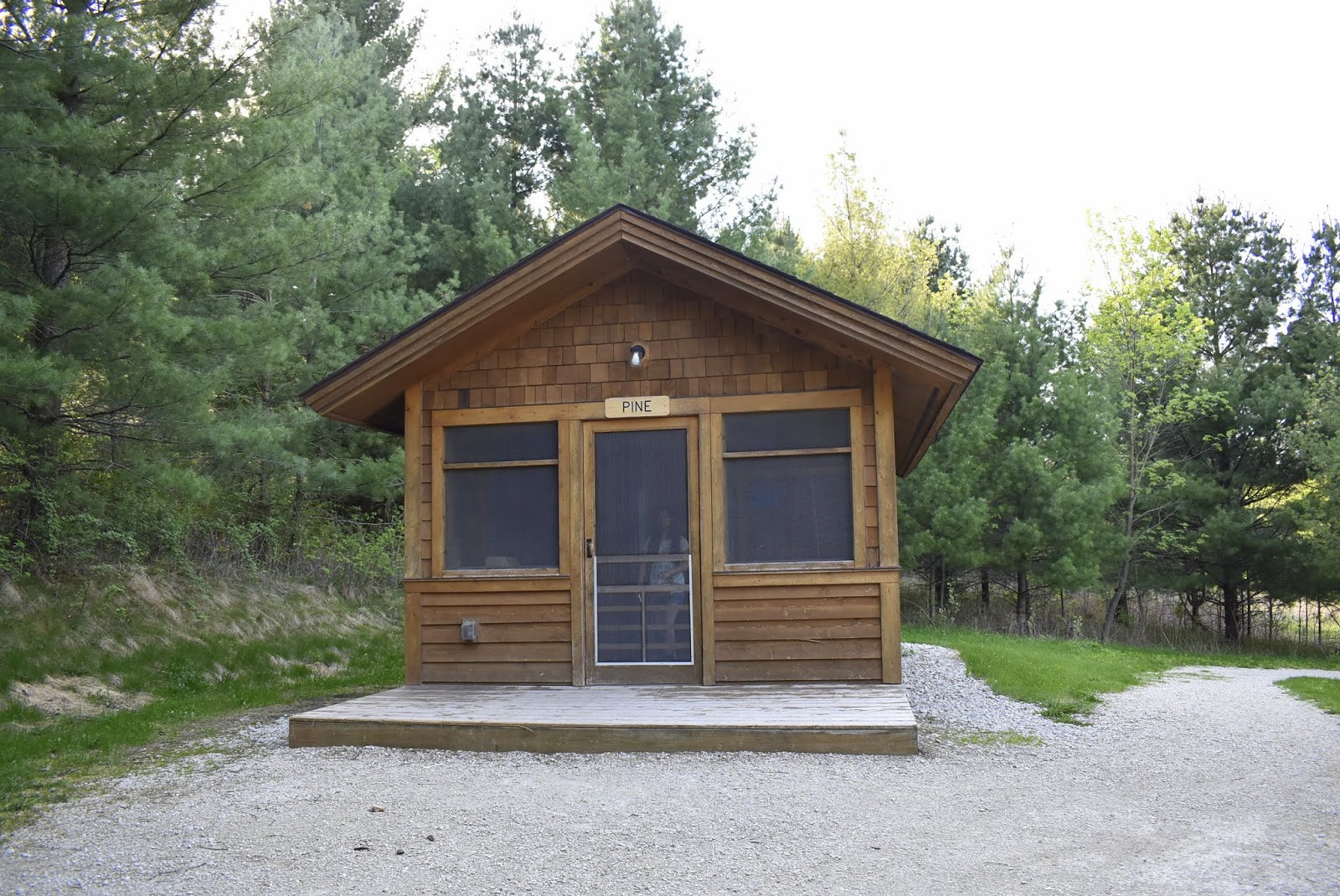

Olivia chose the top bunk and I chose the lower level bunk.


Despite all of our camping gear - minus sleeping bags - burning in the fire at our farm on May 5th, we still had two carts of gear for our trip. The state park provides the carts for cart-in camping which is nice. One of the carts had firewood that took up most of it, so we didn't have as much as we have in past years. We're getting to be more efficient packers (by necessity, in this case) which was nice.


The second night, we chose to eat inside the camper cabin - partly because it was hot outside and there was no shade where the picnic table was and partly because there was less privacy.


We did cook our food over the campfire which was nice. You can't go wrong with food prepared this way. It always tastes better - especially roasted marshmallows.


7. Plant on our nature trail 10 trees and shrubs that are native to Minnesota. (Do this after assessing what types of trees we have at the farm and aiming to have at least 25 different varieties after everything is planted.) (0 of 10 trees or shrubs planted)

I did not do anything with this goal. We are working on recovering after the fire, so planting trees hasn't happened yet. We had to take down 15 trees that were damaged in the fire.

This is one of the groves of trees that had to be removed. Most were boxelder trees. Lots of birds used these trees as a resting and nesting spot.


It was difficult to watch the trees come down.


It opened up the view (at least temporarily) to the west. 


However, that it quite a bit of habitat loss; and I would like to see a wider variety of trees planted throughout the farm to compensate for this loss. We will have to see, though, since the costs for rebuilding and repairing for not only the fire, but the water/mudslide which resulted in the excavation of the cellar entrance and steps have far exceeded what we anticipated. 


8. Attend 2 workshops, classes, or activities at state parks or community organizations. (3 of 2 workshops, classes, or activities done/taken)


During the first quarter of the year, it was too cold to do anything at the state parks. In lieu of going to a state park, Sophia, Olivia, and I went to the White Bear Center for the Arts for an outdoor celebration on January 27, 2018.

In addition to having fun on the pottery wheel and looking at the art indoors, there were dog sled rides that Olivia went on.


There were ice and snow sculptures to enjoy outdoors.


It was a fun way to spend the afternoon.

On March 3rd, we hosted a One Stop Donation Drop at the community center. There were 26 non-profit organizations represented there including the Wildlife Science Center. They brought a hawk which was interesting to see up close. 


The coloring and pattern of the feathers was stunning. It was such a treat to be able to see a raptor up close. 

On May 19th, Olivia and I took a tour of Mystery Cave which is part of Forestville State Park. It's actually about a five-minute or so drive away from the state park, though it is staffed by park rangers and guides.

The cave was very accessible - the floors were level and smooth.


This was an active cave with flowing water that, at times, was highlights with subtle lighting.


Some of the cave formations were darker due to the minerals (I believe it was iron) present in the water.


Some of the pathways were metal grating that provided clear views to the cave below. There were crevices that were easily 25-100 feet deep.


At the end of the tour, we saw Turquoise Lake. Although it wasn't nearly as big or bright as some of the pictures we've seen, it was the first time we saw an underground lake which was interesting.


9. Have 4 picnics when the weather is pleasant and we aren't battling with mosquitoes. (2 of 4 picnics done)

I had hoped that we would have nice weather in March to do a picnic or two. No such luck. After a very brief "warm" spell that got to the upper 40s, the temperatures plunged back down to the single digits during the end of March and early-April.

We then had back-to-back 6" snowfalls.

One of the bird feeders covered in snow from one snowfall.
It's so important to feed the birds -
especially those newly-migrating back to the area - 
who need food yet nothing is available yet in the wild.
(Taken on March 31, 2018.)

So, no picnics in this cold and snowy weather!

The first official picnic of the season was on Thursday, May 17th at Forestville State Park. Olivia and I had a simple dinner - hotdogs, chips, and roasted marshmallows by our camper cabin (Pine).


We always roast marshmallows and like them golden brown. My dad taught me to roast them once, until they are golden brown, and gently remove the outer "shell." Then, go back to the campfire and re-roast the marshmallow so the inner part gets golden brown.


On Friday, May 18th, we had a simple lunch at a gazebo in Harmony, Minnesota, before visiting many Amish farms. We had picked up a protein lunch pack at Wal-Mart before leaving on our camping trip so we had that, chips, and water.


Afterwards, we looked at the apple trees that were blossoming.


The flowers were so beautiful and fragrant.


10. Walk on 4 outdoor labyrinths. (My eventual goal is to have walked on the same number of labyrinths as my age. Obviously, I have a long way to go to reach this goal.) (0 of 4 labyrinths walked)

The majority that are close-by seem to be on grass or indoors. During the first quarter of the year, I didn't do any walks.

Sunrise on March 25, 2018.
This is looking northeast from our front yard.

During the second quarter of the year (April through June), I still didn't do any walks. I'm wondering if this is a goal that I need to let go. Perhaps it's not as important to me as it once was; and isn't critical to appreciating and enjoying nature.

Planting Trees and Memories

Since the beginning of our time at our farm, we have been planting and/or transplanting trees here. The previous owners had planted probably close to 100 seedlings in a "nursery" area in one of the pastures. We didn't do much with them initially, but then, as they grew larger, we knew we had to transplant them so they would have enough room and survive.

Once the girls were born, we knew we wanted to plant trees with them. We planted the willow tree and maple tree when Sophia and Olivia were toddlers on Father's Day. They were eager about putting the tree into the hole in the ground and filling it back up with soil.

The willow tree is to the left in the photo - the large, round tree.

We've planted evergreens for several years along the north and west part of our farm.

We had a tiny grove of pine trees starting in the front yard
until Japanese beetles destroyed them.

The tree plantings sometimes take as little as 10 minutes, and other times up to an hour (if we are planting a lot of trees. The impact, however, has lasted for many years. (However, this past year quite a few of the trees we planted in the past five years were lost to Japanese beetles which was frustrating.)

With the exception of the grove of pine trees in the front yard, we have witnessed the daily and monthly growth of the girls and their trees.


The trees measured the seasons in our yard.


We have watched an increase in birds over the years - more wrens, black-capped chickadees, woodpeckers, blue jays, and cardinals.


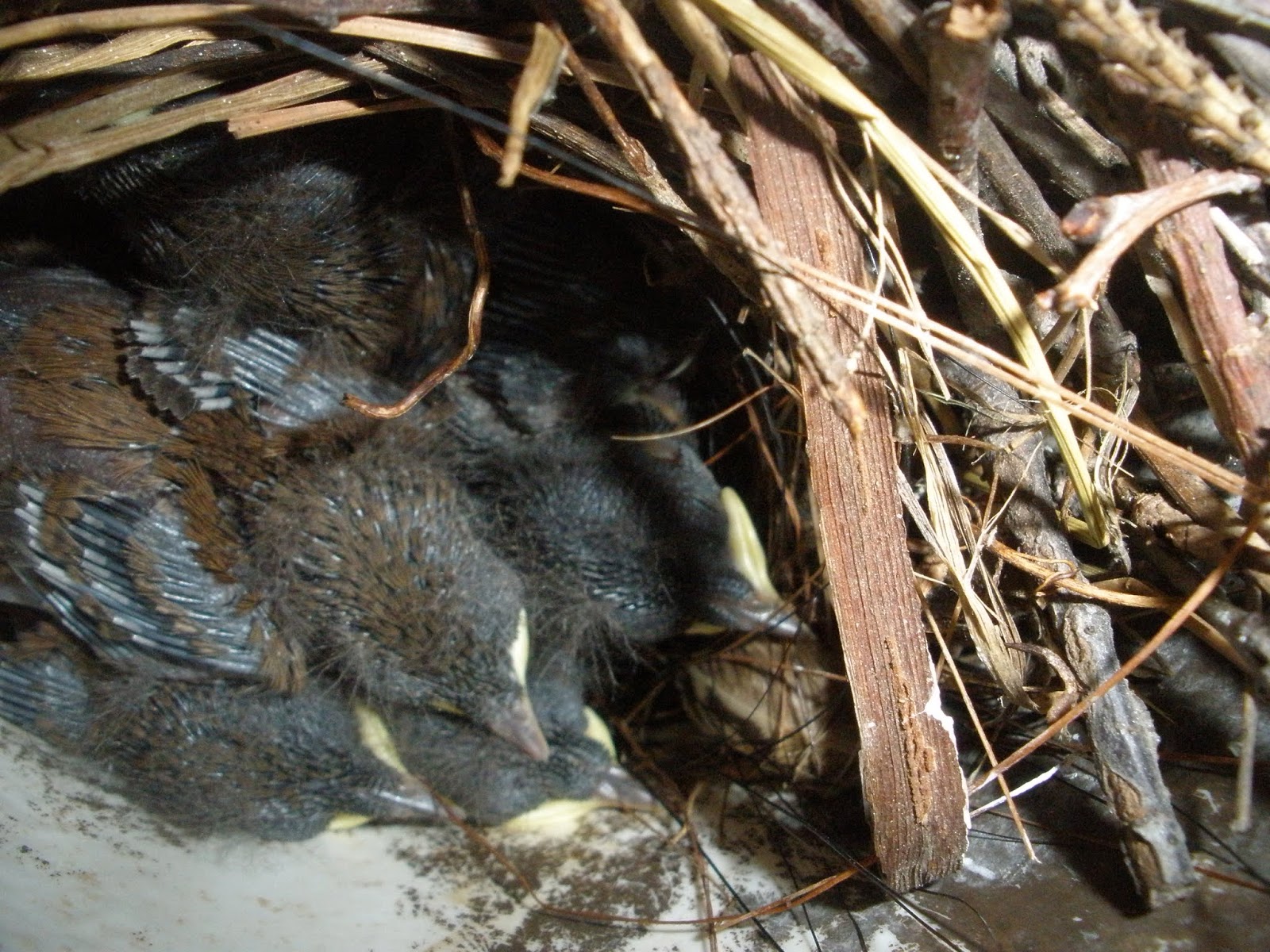
They build their nests with bits of dry grass and twigs.


Baby wrens in a nest on July 25, 2010.

We have seen birds that never were here when we first moved to the farm in 1995, but who we have seen at some point (frequently or periodically): rose-breasted grosbeak, orioles, indigo buntings, bluebirds, brown thrashers, catbirds, red-winged blackbirds, mourning doves, and a variety of types of sparrows...to name a few.


In the summer, we sometimes would sit under the trees and read...


 or have a picnic.


In the fall, we picked up pinecones and filled bowls to decorate the dining room table.


During the winter, when the cold wind was blocked by the branches, we felt warmer.


Trees grow like children - they seem so small for such a long time.

The girls in their Easter dresses in 2008.
Sophia was 7 and Olivia was 5.

Then, all  of a sudden, they're young ladies.

The girls on Christmas Eve in 2012.
Sophia was almost 12 and Olivia was 10.

Now, Sophia is entering her senior year in high school and Olivia is entering her sophomore year in high school.


The willow and maple trees have grown to be well over 20 feet tall.

Do the girls remember planting all the trees? Some of the them.

Each day that we see the trees, we see something more. It is a measurement of time passing and of our small daughters growing into young women.

 
The girls with Santa in 2008 and 2017.
Sophia was almost 8 and 17; and
Olivia was almost 6 and 15.

How the simple action of planting trees grows bigger and bigger every year.

Friday, July 20, 2018

Embroidered Button Bookmarks

For a long now, I've had a pin on Pinterest that shows a variety of bookmarks made from circles of felt, buttons, and paper clips. I've wanted to make them, but haven't taken the time to do any embroidery and crafting.

This morning, I gathered my wool felt bin, embroidery floss holder, and the other supplies needed to make the bookmarks (buttons, needle, scissor, and paper clips).

I cut two larger circles out of one color of felt, one smaller circle out of another color of felt, and found complementary buttons.


First, I sewed the button onto the smaller circle of felt. Then, I used the buttonhole stitch to sew the smaller circle of felt onto one of the larger circles of felt.

I placed both of the larger circles of felt on top of one another and sewed them together using the buttonhole stitch. As I was almost done sewing, I inserted a large paperclip into the opening and then embroidered the rest the circles of felt.

The paperclip does move up and down a bit, so one way to fix that would have been to sew the top of the paper clip onto one of the larger pieces of felt.


This was an easy project to do that used up some scraps of wool felt that I had on hand.

Thursday, July 12, 2018

The Out-of-Sync Child Grows Up (Book Notes)

Many years ago, I read The Out-of-Sync Child to better understand Sensory Processing Disorder (aka Sensory Integration Dysfunction) since both Olivia and Sophia have it. There was a companion book, The Out-of-Sync Child Has Fun, which had many ideas for doing engaging and fun activities with children who have SPD.

As the girls became older children and teens, the activities weren't as age appropriate. So, when I saw The Out-of-Sync Child Grows Up by Carol Stock Kranowitz I knew I needed to read it so I could learn more about how to help the girls as they went through their teenage and adult years.


The book is a combination of information about SPD, strategies for dealing with different elements of SPD, and essays by teens and parents of teens who have SPD. This blend of perspectives was very insightful and provided good information and ideas for moving forward with the girls. Many of the strategies we already use. However, there were some new ideas that we can try as well as reassurance that the girls aren't the only ones experiencing these challenges. 

Some things that stood out that I want to remember:
- Certain boys and girls respond to unremarkable experiences in remarkably unusual ways. They may resist going places and being with other people. They may reject huge...or crave them constantly. They may go, go, go...of lack get-up-and-go. They may dress sloppily, eat only pasta, drop and break everything, whimper or rage over "nothing" for no apparent reason, insist on doing things their way, and act immaturely for their age, even as they grow. With their late and slow, or rapid and intense, or otherwise "off" responses, they seem out of sync with other people and the world.
- SPD occurs in the central nervous system when one's brain can't react typically to sensory messages, coming from one's body and environment, in order to function smoothly in daily life.
- "I was 11 when I finally learned to ride a bike because of my balance issues and 18 when I learned to drive because I had trouble with space and where the car was on the road and especially with parking."

Sophia's first bike ride of the year.
(April 5, 2011)

- "I was notoriously messy. My room looked like a tornado ran through it..."
- "As you get older, you'll be more aware and in tune with your body....I have learned to control how I respond to sensory challenges."
- "I tolerate irritants, like having my teeth cleaned, because I know they will go away."

Sophia pulling out Olivia's wiggly tooth.
(April 23, 2014)

- Auditory-language skills, based on the auditory sense, enable a person not just to hear sounds and words but to understand and respond to them. Activities dependent on good auditory-language skills include:
     => Listening to the teacher, remembering and following directions
     => Articulating speech sounds clearly enough to be understood
     => Engaging in conversations, answering questions, and making apt comments
     => Using language for verbal and written self-expression
     => Using auditory feedback to self-monitor voice volume
- Imagine extreme examples of what things feel like. Imagine wearing scratchy sandpaper clothes that make you itch all over, all day. Imagine washing your face in a buck of perfume. Imagine feeling as if you're going to fall off a cliff when you walk a few steps. Imagine sitting right near the stage, next to a rock band's amplifier.
- The goal is to help all children and adults manage their sensory challenges so they can lead satisfying, productive lives.
- A subtype of Sensory Modulation Disorder is sensory over-responsivity - causing the person is a "sensory avoider" to shrink from stimuli (e.g., malodorous, spicy, jolting and prickly stimuli, but also mild everyday stimuli can quickly make the sensory avoider irritated...very irritated...or angry and thoroughly miserable."
     => Light, unexpected touch can be bothersome. Being kissed or caressed makes them uncomfortable.

Olivia wearing a fireman's hat at the 
annual fire department's open house.
This was a challenging experience wearing
the hat and something over her face.
(October 9, 2007)

- For sensory cravers, there's the interoceptive subtype. Someone can eat a whole pizza or a gallon of ice cream, and then some more, to get the sensation of being full.
- For Sensory Discrimination Disorder, there's a vestibular subtype. An example would be never learning to ride a bike because of poor coordination and balance.
- There's a visual subtype. An example is learning how to drive. A teen could have difficulty knowing where the car is on the road, where other cars are in relationship to hers, and especially how to parallel park.

Sophia is driving the Jeep so she can bring in a load of pumpkins.
She's 10 years old in this photo.
She's driving from the field and through the pasture. 
She opted not to drive through the backyard and to the driveway.
(October 16, 2011)

- The auditory (hearing) subtype means that someone could have difficulty understanding jokes and puns, a teacher's verbal instructions, or what a friend just told her.
- The gustatory (taste) subtype means that they can't discriminate when she has a bad taste in her mouth and should brush her teeth.
- Self-blame abounds. Teenagers with SPD may feel week and inadequate. They may wonder, "If other people can tolerate noise, odors, escalators, and wool mittens, if other people can keep calm in stimulating situations, if other people can do this and that, why can't I?"
- Some teens attempt to cope by turning away from other people and becoming loners.
- "If someone with SPD says something's bothering them, take it seriously. If it isn't fixed, it will get worse and worse."
- "We're just like everyone else, except more sensitive to sound, sight, touch, smell, motion...to everything in our environment."
- "If I say I need a minute or two, give me time and do not rush me. Don't punish me for needing a break."

The girls resting with some of the pets on the bed.
They would alternate between homeschooling and resting.
(April 2, 2013)

- Strategy for sensory demands that give a person trouble: Break it down into its sensory components. For example, with toothbrushing: Does the toothbrush hurt your gums? Does the taste or smell of the minty toothpaste with artificial sweeteners gross you out? Figure out what type of toothbrush works best and what type of toothpaste is palatable.
- For shaving: use a shaving cream with a texture and scent you like to help with desensitizing the skin. You can also use deep pressure to massage on the shaving cream.
- Challenges with clothing: "I don't like the tag's feel against my skin....It's too tight."
- Some teens with sensory challenges like their clothing loose; others like it tight. Some like it hot, preferring layers; other like it cold, wearing shorts, t-shirts, and sandals in the winter.

Girls wearing loose dresses. 
These were the most comfortable for them 
since they were tight against their skin.
(March 23, 2008)

- "I would scratch so hard because the pain of cuts felt better than what the clothes felt like on my skin."
- "I would take burning hot baths until my skin would turn red." (This is being under-responsive to temperatures.)
- Buy clothes a side too large; they will give you less skin friction. Or, if snug clothes are more comfortable, wear bodysuit shapewear underneath.
- Look for tagless shirts to avoid the irritation and stinging.
- At home, go barefoot or just wear socks.

Sophia cutting fabric. She wears socks in indoors.
Olivia prefers to go barefoot indoors and 
not wear socks - even when wearing shoes or boots.
(July 20, 2009)

- Consider buying "preconditioned" clothing from a consignment or thrift shop.
- In the house during the winter, use a humidifier to keep humidity in the range of 40-60 percent to reduce static and prevent dry, itchy skin.
- Find activities involving deep pressure that desensitize your skin and feel good, such as having someone push against you, being rolled over and under a big therapy ball, and relaxing under a weighted blanket.
- Always put some food on the table that the choosy eater finds acceptable.

Olivia helping make homemade pickles.
Pickles are one thing that she enjoys eating.
Lunches and dinners often times include pickles.
(September 1, 2010)

- Driving: avoid busy streets, because there may be too much going on to process the movements, noises, lights, and so on. Practice a long time on easy roads before going out on highways and more traffic.
- Do hatha yoga.
- "I became aware that I can't understand what the person next to me is saying because there is so much noise."
- When the going gets tough, sit down and pull over - and breathe. Don't push yourself past your breaking point.
- Use the time you spend traveling from place to place to learn new things. Listen to soothing music if you must concentrate on driving. Listen to audiobooks and interesting interviews if you are traveling on the bus, train, or airplane.

Music we've checked out of the library.
(Taken on June 28, 2013)

- Drape a "lap buddy" (pillow or tube sock filled with beans or fish-tank  gravel) on your thighs or shoulders to provide calming weight.
- Fidget with handheld items that are appropriate for the place (Chinese therapy balls at home, squeezable gadgets in public places).
- Advocate for yourself in a school setting and let instructors know if certain things bother you or if you need extra time and a quiet room for exams.
- Spend lots of time outdoors, ideally in the country or woods. Looking, listening, and moving outdoors will enrich your understanding not only of the subject you're studying, but also of biology and earth science.

Girls enjoying being outdoors.
They are exploring the pond in the west pasture.
(Taken on March 30, 2011.)

- Listening to instrumental music when your work involves reading and writing; and music with lyrics when work is manual - like painting or raking.
- Get at least 30 minutes of whole-body exercise preferably outdoors, every day and at least three hours before you go to bed.
- For two hours before going to sleep, avoid electronics that can interfere with relaxation and suppress the release of melatonin, which brings on drowsiness.
- Relax with a calming activity: rock in a rocking chair; take a warm bath; read a real book or magazine.

Olivia reading to Montague.
(Taken on December 3, 2012.)

- Block out house or street sounds with a fan or white noise machine.
- Ways to create a sense of belonging: Do activities together such as preparing food, walking the dog, doing errands, watching a movie, playing board games, organizing photographs, or designing scrapbooks.
- Become "compassionate collectors." A socially-active enterprise has innumerable benefits for the family and community. Not only does this work encourage mindfulness of others, but it also nourishes the sensory systems and develops praxis. Examples: grow and/or prepare food to bring to a shelter for homeless people. Collect clothes, toiletries, and cosmetics or food; and then sorting, boxing, lifting, and carrying the items to a shelter.

Sophia and Olivia with some of the books they collected
to create the first-ever library in Lesotho, Africa.
(Taken on May 30, 2012.)

- "My inability to pick up on social cues, coupled with my mental and emotional dysfunction...skewed my thought process. My extracurriculars were nonexistent."
- "I developed an addiction to the internet. When I wasn't in class, I was on the computer....I never went to parties, never drank, and never did drugs. I didn't go to parties...because I felt like I needed a direct invitation."
- "I rarely had contact with other members outside of group events....I still feel like I need permission to join in with others."
- "Accumulated sensory input, especially noise, can be way too much to handle, which is why I often isolate myself in my room with the door shut."
- "Those of us with SPD spend more time with our families than with peers, especially if family members are caring and accepting and try not to push our buttons."

The girls' First Communion.
Olivia was almost 7 years old and
Sophia just turned 9 years old.
(Taken on January 10, 2010.)

- "While our self-confidence may not grow as quickly, and we may not be as well prepared for adulthood, we still benefit greatly from having tight-knit family bonds."

The girls with my mom and me.
A rare three-generation photo.
(Taken on February 9, 2014)

One of the mothers of a daughter with SPD said, "Raising my daughter has been one of my most joyful and rewarding challenges." I couldn't agree more!


Monday, July 2, 2018

Spiritual Practices A to Z: Kindness

The next spiritual practice in the alphabetical series is Kindness. There are many great insights and ideas from Spirituality and Practice that are below. 

Spiritual Practices: Kindness
Enhances: Generosity
Balances/Counters: Selfishness

The Basic Practice

Kindness is the first of the three great treasures advocated by Lao Tzu. The Buddha taught that generosity is a primary quality of an awakened mind. Jewish and Christian ethics are built upon deeds of kindness, as are the daily interactions of people of primal traditions.

The spiritual practice of kindness encompasses a range of small acts and habits that we know as old-fashioned good manners — saying "please" and "thank you," lending a helping hand, cheering someone up with a smile, or waiting your turn. It applies not just to your relationships with other people. Etiquette in the spiritual life extends to animals, plants, things, and the Earth.

Spreading kindness at the library.
(Taken on June 14, 2014.)

This practice also means being generous with your presence, time, and  money. Give freely without expecting anything in return. Kindness is never a quid pro quo endeavor.

Why This Practice May Be For You

Few people would describe themselves as unkind, cruel, or nasty, yet we often miss the mark on this spiritual practice. Simply remember the many times you have been hurt by someone not doing something: the call that didn't come when you were feeling low, the thank you note that never appeared, the missed appointment. Now, consider how often you have neglected to act in similar circumstances. Kindness is very susceptible to the sin of omission.

Still, acknowledging that we have missed another's kindness can make us want to be kind more consistently ourselves. This is one of those situations when a negative experience has a positive outcome.

Sophia and Olivia packing up pillows to 
donate to a homeless shelter.
(January 27, 2011.)

Of course, sometimes we are simply too self-absorbed to notice that we are not being kind. Selfishness quickly undermines manners. Generosity, as well, is difficult for both the miser and the glutton.

Quotes

If the earth does grow inhospitable toward human presence, it is primarily because we have lost our sense of courtesy toward the earth and its inhabitants.
— Thomas Berry quoted in Rummaging for God by Melannie Svoboda

Appreciative words are the most powerful force for good on the earth.
— George W. Crane quoted in Full Esteem Ahead by Diane Loomans

Kindness trumps greed: it asks for sharing. Kindness trumps fear: it calls forth gratefulness and love. Kindness trumps even stupidity, for with sharing and love, one learns.
— Marc Estrin quoted in Prayers for a Thousand Years edited by Elizabeth Roberts and Elias Amidon

Taking a tour of a food shelf and learning ways to help.
(Taken on March 19, 2012)

Be kind to people whether they deserve your kindness or not. If your kindness reaches the deserving, good for you; if your kindness reaches the undeserving, take joy in your compassion.
— James Fadiman and Robert Frager in Essential Sufism

The kindnesses of others fertilize our soul, they become a part of who we are, and we carry them and their love. We feel this when people die, how their gifts remain alive in us.
— Wayne Muller in How, Then, Shall We Live?

If there is any kindness I can show, or any good thing I can do to any fellow being, let me do it now, and not defer or neglect it, as I shall not pass this way again.
— William Penn quoted in Lent by Megan McKenna

Books

I read the book How We Behave at the Feast by Dwight Currie which is essentially a book of weekly reflections. Although it is set up like this, I read it in a couple of days instead. These are things I want to remember:
- "...he comes as a guest to the feast of existence, and knows that what matters is not how much he inherits, but how he behaves at the feast, and what people remember and love him for" (from an essay by Boris Pasternak in which he voiced his hope for the youth of the post World War II era).
-  "Where there is too much, something is missing" (an old Jewish saying).
- "The hope of the world lies in what one demands, not of others, but of oneself." (James Baldwin)
- "Mothers are the peacemakers who, by their example, teach us that compromise doesn't mean that we have failed. Mothers are the providers who, by their own sacrifice, show us that sharing doesn't mean we'll have less. And mothers are the judges, far wiser than Solomon, who cannot love one child more than the others but can still bless all children with a love of their own."

Mom sewing a communion dress for one of the girls.
(Taken on November 18, 2009.)

- On going to have picnics at a gravesite: "Often they cried, but just as often they would laugh. Most of their memories were good ones. They felt very comfortable there, and, consequently, so did I. It was a nice place for a picnic."

My dad and mom's grave. This is my dad's side.
(Taken on May 28, 2018.)

- As long as we remember and celebrate the lives of those who are gone, our feast is in no way diminished. We will not dine with an empty chair if we choose instead to have a picnic with our memories."
- "The great secret...is not having bad manners or good manners or any other particular sort of manners, but having the same manner for all human souls: in short, behaving as if you were in Heaven, where there are no third-class carriages, and one soul is as good as another." (George Bernard Shaw, Pygmalion)
- The next time you find yourself dining on someone's reputation, snacking on someone's feelings, or enjoying a steady diet of nothing except stories about yourself, remember you are talking with your mouth full."
- If you need to say you are sorry, say it - then accept the forgiveness that is given. If you need to end a relationship or to recover from a lost love, then do it with honesty, compassion, and grace. If your dreams are dashed, close your eyes and pray for new visions. At the same time, you must wait and watch for the next invitation. One will always come. The trouble is, you won't know you've received it if you're still mired in regrets and remorse.
- When you write a letter, it is an act of faith that there is a friend out there, a confirmation that you are never alone. A letter is always welcome. Not even e-mail or faxes (though decidedly faster and more immediate) are as satisfying and rewarding as finding a letter in your mailbox - the stationery, the hand-addressed envelope. A tangible object was created only for you, it has traveled the miles to overcome time and space, and it is now in your hand. It is a letter from a friend.
- Names are given to children at birth. The gift of a name comes with all the love and all the hope that new life inspires. Names have beginnings.

My mom, dad, and godmother coming out of 
St. Bridget's Catholic Church in Minneapolis 
on my baptismal day. 
(Taken in Summer 1966.)

- To know people's names is to acknowledge their humanity, to listen to their stories, and to share in their future.
- "For where your treasure is, there will your heart be also." (Jesus)
- We must take responsibility for our own mistakes and misdeed just as we take delight in our success and achievements.
- Charity derives from the same Latin word as cherish, caress, and care. And care rhymes with share. So, when you think of charity, you should think of what it means to care enough to share what you can spare of your cherished fare.
- We all have our quirks. And our quirks become habits, and our habits become routines, and our routines turn into the rituals that become as sacred as religious traditions. It's how we deal with the passage of time.
- Our habits save time. Our routines preserve time. Our rituals re-create time. Our traditions honor time.

Christmas has always involved having a manger set up, 
Christmas stockings hung by the fireplace, 
a decorated tree, and presents. 
This is me on my first Christmas - almost six months old.
(Taken on December 25, 1966.)

- Rituals get us started and traditions show us the way.
- We need to honor and respect all the ruts, routines, and rituals that people employ as they travel down the road of life. The ruts give them comfort, the routines keep them young, and the rituals remind them that they are not alone.
- The Ark Project is a crusade to save those savory foods that definitely take longer to prepare than they do to consume. You have to create an Ark Project all your own. You have to savor all the old family recipes that will feed and nourish you for a lifetime. The joy, the caring, and the love is in the preparation. Do good by eating - and living - well.

My 52nd birthday dinner made on the grill:
steak with onions and mushrooms; and Brussels sprouts.
(Taken on June 29, 2018.)

- The second book that I read, Heart, was written by Gail Godwin. The book takes us on a journey of  ideas, stories, and anecdotes about the heart beginning with the oldest artistic representation of the heart on a Spanish cave wall in 10,000 B.C. to the most recent books on the subject by the Dalai Lama, Thomas Keating, and Paul Pearsall.

Film 

Babe: Pig in the City is a movie that focuses on kindness through an animal that herds sheep by practicing courtesy and empathy. Now Babe again comes across as a great exemplar of kindness. He is generous and self-sacrificing.


Music

The song Get Together by Chet Powers, was made famous by The Youngbloods. I didn't know the name of this song even though I've heard it many times. The minute I heard it, it brought back good memories of simpler times. Happy times. As Spirituality and Practice said, this song "gives us the key to kindness — smiling on our brothers and trying to love one another right now."

 In Bridge Over Troubled Water by Simon and Garfunkel, the singer goes even further. As Spirituality and Practice said, "He promises to always be there, like a bridge over troubled water, when you are weary, feeling small, down and out, on the street, and even when your time has come to shine. Here kindness is easing the mind."

When you're weary, feeling small
When tears are in your eyes, I'll dry them all (all)
I'm on your side, oh, when times get rough
And friends just can't be found
Like a bridge over troubled water
I will lay me down
Like a bridge over troubled water
I will lay me down

When you're down and out
When you're on the street
When evening falls so hard
I will comfort you (ooo)
I'll take your part, oh, when darkness comes
And pain is all around
Like a bridge over troubled water
I will lay me down
Like a bridge over troubled water
I will lay me down

Sail on silver girl
Sail on by
Your time has come to shine
All your dreams are on their way
See how they shine
Oh, if you need a friend
I'm sailing right behind
Like a bridge over troubled water
I will ease your mind
Like a bridge over troubled water
I will ease your mind

This is kind of a sad/comforting song to listen to - more like one that you would hear if you were going through a very challenging time in your life or if someone died.

Both of these songs were written during the hippie era. Maybe that's why I like them. Simple messages. Comforting. Insightful. Songs I could listen to again and again.

Art

Mexican artist Diego Rivera shows the oppression and nobility of the poor through his paintings. In The Flower Carrier, a kneeling man is burdened by a large basket of flowers on his back. A woman lends support, adjusting the balance of the load. Although it is a small act, it is both helpful and kind.


It reminds me of some of the men and women on the street in China carrying heavy or large loads on their backs or bikes. Having someone to lighten one's load, to provide that support - even in the smallest ways - can make such a tremendous difference for the person who is struggling.

Daily Cue, Reminder, Vow, Blessing

I haven't done these cues or reminders. However, I want to keep them here because I may use them in the future:

• Watering my houseplants is a cue for me to expand my practice of kindness to animals and inanimate beings.

Cooper looking out the window at the backyard.
Lots of plants and fresh-canned strawberry jam are on the counter.
(Taken on June 26, 2014.)

• Watching someone give up their seat to an elderly person is a reminder for me to make the little kind gestures.

• Knowing how nice it is to receive compliments, I vow to praise someone as an act of kindness today.

Practice of the Day

The Buddha taught lay people the virtue of making the "seven offerings that cost nothing": . . . a compassionate eye, a smiling face, loving words, physical service, a warm heart, a seat, and lodging.
— Jiko Kohno in Right View, Right Life

To Practice This Thought: Make one of the seven offerings that cost nothing.

Olivia on horseback doing therapeutic horseback riding.
(Taken on August 21, 2007.)

Journal Exercises

This is an interesting idea that I would like to start doing at some point:

Write a portrait of "The Kindest Person I Know," including specific examples of this person's kind deeds.

Tristine Rainer in The New Diary makes an interesting observation about the value of writing portraits, especially of someone you admire: "By writing diary portraits of people who intrigue you, you enter their qualities in your book, in your space, and begin the process of recognizing and taking possession of those qualities."

Discussion Questions, Storytelling, Sharing

• Giving to others is one part of the spiritual practice of kindness. Another is being able to receive graciously the gifts of others. Which are you better at? Why?

Without going into a lot of detail, I would say that I am much better at giving to others and being kind. I enjoy thinking of ways that I can be of service and be helpful.

Receiving gifts - although always welcomed and appreciated - is, for me, harder to do. I feel like I am imposing on others.

The sensory and memory quilt I made for my dad 
after he was diagnosed with Alzheimer's Disease.
(Taken on December 21, 2009.)

• Who has taught you the most about generosity and kindness? Do you think they are given enough attention in our society? Explain your views.

My parents, by far, taught me most about generosity and kindness. Their entire life revolved around hospitality, service, volunteering, and being generous with their time, experience, and skills. The way they lived their lives was inspiring, and definitely had a huge impact on the way that I have led my life and the way that I have carried on their legacy by teaching Sophia and Olivia the importance of giving of oneself to help others.

I don't think people like my parents were or are recognized enough in our society. More attention is focused on physical beauty, wealth, athletic ability, and other traits that truly don't make the positive impact on others that generosity or kindness do.

Household, Group, and Community Projects

Donate blood through local hospitals and other programs. Help organize a blood drive at your place of work or worship.

I helped call over 70 prospective blood donors for a blood drive that was held by our local Lions club in mid-June. I'm also helping call over 80 prospective blood donors for a blood drive that my daughter is coordinating on July 11th.

I've also helped Sophia with the blood drives she's hosted; and provided volunteer support for her as needed. I'll be doing the same on July 11th.

Sophia working on the blood drive that 
she hosted in March 2018.
(Taken on March 3, 2018.)

I haven't done these projects yet, though I want to list them so I can do them at some point:

Reframe household responsibilities as acts of kindness. For example, emptying the litter box is being kind to the cat. Dusting is being kind to furniture (in the sense that it is being taken care of and not neglected). Hanging up your clothes is being kind to them (I'm guessing here that Spirituality and Practice means that you are caring for your clothes and making them last longer).

Draw up a list of etiquette practices toward members of your household, pets, the place where you reside, the natural world, neighbors, etc.

Keep a bank or box in your home and deposit loose change in it. Every time you go out to dinner, you might put money to pay for another meal in the box. Hold a household council to decide how to distribute your generosity fund.

• Rabbi David Cooper points out that in the Jewish tradition it is considered a high level of charity to help people become more self-sufficient by enabling them to educate and train themselves or to start their own business. As a group, begin a Scholarship or an Entrepreneur's Fund.