Showing posts with label chores. Show all posts

Monday, February 24, 2020

Living Without Electricity - Book Review, Notes, and Memories

I'm working on my list of books to read on Goodreads. This week I read Living Without Electricity by Stephen Scott and Kenneth Pellman. The book focuses on how the Amish live without electricity and also explains how they have created ways to light their homes, heat their homes, be entertained, communicate without a phone, and get around without a car.


The authors explain that the Amish value simplicity and self-denial over comfort, convenience, and leisure. So they try to discern the long-range effects of an innovation before deciding whether to adopt it.

Amish home in Southeastern Minnesota.
Olivia visited the business here when 
we were in the area camping in May 2018.

Some interesting facts from the book:
- While electrical power was available to many city dwellers in the early 1900s, the majority of rural North Americans had no access to current until the 1930s or 1940s.

No power lines leading to the house is 
one sign that an Amish family lives in it.
(Taken in May 2018.)


- Most Amish believe that the number of devices that can be operated by a battery or generator is limited, and that careful use of such items poses minimal risk to community values.
- An old-fashioned pitcher pump provides cistern water for washing in the kitchen. (As a side note: I remember visiting my Uncle Walt and Aunt Beulah's farm in Illinois and they had a water pump like this inside their home.)
- Windmill towers topped by large, flower-like fans...are often used to pump water into elevated storage tanks and to fill water reservoirs near or under the house which are tapped by hand "pitcher" pumps. (Side note: My uncle and aunt had a windmill and outdoor pump as well. I remember using it when we would visit them.)

Windmill that Olivia painted in 2016 
for a customer.

- Wood-burning water heaters [and] gas and kerosene water heaters [are used by the Amish]. (We have a gas water heater at our farm.)
- The Amish hang their laundry on clotheslines year-round. In some communities, very long wash lines attached to large pulleys extend from house to barn. In Lancaster County, the clothesline often runs into the wash house. This allows the person doing the laundry to hang up the wash inside and convey it out through a door. In wet weather, clothes are placed on wooden racks inside or hung on lines in the basement or another room. A drying rack often is positioned above the cookstove.

Clothes drying on lines at an Amish farm.
(Taken in May 2018.)

- Wedding festivities last all day.
- Fellowship meals follow each bi-weekly church service.
- An important part of Amish life is informal visiting. Families often visit one another without advance notice, and it is common for unexpected guests to stay for a meal.

Olivia and I stopped at an Amish bakery business at someone's home.
There were many visitors there that day as evidenced by the buggies.
We could hear singing inside the home.
(Taken in May 2018.)


- Women and girls usually sew, quilt, knit, embroider, cross-stitch, or do other kinds of needlework.
- Checkers, chess, Parcheesi, and even Monopoly are among popular table games.
- Amish children act out farming practices or horse-and-buggy trips. Baler twine serves effectively as reins, and a wagon as a buggy.
- Though musical instruments are strongly discouraged among the Amish, some families enjoy singing together without accompaniment.
- Many Amish participate in circle letters, in which people of similar interests, occupations, or situations (such as widows, teachers, or harness-makes) correspond with one another. Typically, a person receives a packet containing letters from each person in the circle. The receiver takes out the portion he or she had written for the last round and adds a new letter, before sending the whole batch to the next round.
- One of the weekly newspapers in the U.S. is the Budget. The letters include reports on weather, visits, illnesses, accidents, church services, births, deaths, and marriages.
- Convenient transportation tends to make it easier to yield to temptation. With a car, you can go wherever you want, whenever you want .This is especially harmful to young people.

Following a horse and buggy at a safe distance.
(Taken in May 2018.)


- The Amish point out further that cars are often objects of pride and can become status symbols. The feature of style, speed, comfort, and convenience...are in direct opposition to the Amish values of nonconformity, simplicity, self-denial, and humility.

There was a section about different types of lighting systems including natural gas and pressure lanterns. It reminded me of learning how to use propane gas lights in a cabin. It was a bit unnerving at the beginning using them, but I became more comfortable once I used them more.

Another section of the book discussed cooking with propane gas and how some Amish are permitted to use bottled gas and can cook on gas ranges like those used by non-Amish people. This is no different than what I use right now. My parents had an electric stove upstairs and a natural gas stove in the basement in the laundry room. They would use that when they did canning and when we had company and needed a second oven or stove to make food.

Since moving to our farm in 1995, I've used propane and a gas stove. I like that there is immediate heat versus the gradual-heat-up of an electric stove.

I had to laugh about the refrigeration methods used and how they sound like what we do sometimes: "The most conservative Amish groups use only natural refrigeration for food items. In cold weather, setting perishables outside or in unheated parts of the house suffices." I can't even count the number of times we've done this same thing. We have an unheated mudroom that we have put things in as an extension of our refrigerator.

One of the things that was difficult for me to see was a picture of a horse hooked up to a device to pump water. The horse had a wooden circle it would walk on to generate the power for the water pump. They also use horses like this for powering a washing machine or turning a lathe. I thought it would be a sad life for a horse to have to walk around in a circle for a prolonged period of time.

These horses, thankfully, were not hooked up to devices to pump water.
This Amish farm had a variety of large horses and young foals
who were enjoying galloping in the pasture and
relaxing and watching people. 
(Taken in May 2018.)

There was a chapter about doing laundry. There was a picture of a wringer washer. My parents had the same exact wringer washer as is pictured in the book. The difference is that my parents plugged their washer into the wall to use it while the Amish would use a gasoline engine, compressed air, or a hydraulic pump. I remember getting my hand stuck in the wringer part when my mom stepped away from the washer momentarily. It really hurt. Thankfully, none of my bones broke when that happened.

The chapter also described hanging clothes inside in wet weather and outdoors in all other types of weather. I remember my parents doing laundry and hanging up clothes outside. My mom typically would do this. However, when my dad was on summer break from being a school social worker, he enjoyed hanging up clothes outdoors as well.

My mom asked me sometimes to help. The "rules" were that personal garments (underwear) were hung on the line under the deck out of neighbors' view; and the other clothes were hung on the lines that extended from the house to the trees (east to west). The wind from the north and west would blow the clothes and give them that fresh outdoor scent. The only thing I didn't like having line-dried were towels.

What I thought was insightful was the concern about using a machine that allows one person to do a job that used to require several people to do that job. The Amish aren't in favor of that because, although it does save time, it prevents a sense of community from developing.

Another Amish farm and greenhouse business 
that Olivia and I visited.
(Taken in May 2018.)


Near the end of the book was the statement, "The Old Order Amish are not against change, but try to carefully determine which changes might adversely affect their church and community." I think this thoughtful approach to life is with merit. What if each person carefully considered how the decisions they made would affect themselves, their families, community, and world? What a different world we would live in.

Thursday, February 28, 2019

Outdoor Mom's Journal - February 2019

During our outdoor time this month we went...to see the migrating swans and geese in Monticello. There are literally thousands of waterfowl at an open area in the Mississippi River.


The sound is almost deafening with so many birds in one area. There is someone who feeds them each day in the morning; and Olivia and I were able to see the tail-end of the feeding which was fun.


At home, I went outside when I heard rustling near the fence under the pine trees on the east side of the backyard. I'm glad I did: it was a pheasant who was having trouble getting up and over the fence. There is so much snow and not enough clearance, so it is more challenging for them to get up in the air and clear the fence.

Check out the wing marks on the snow. I think they are so pretty!


The most inspiring thing we experienced was...watching from inside a snowstorm and then going outside to see the impact that wind and snow had on trees and bushes.


It kind of reminds me of a tornado or summer storm when leaves and twigs are scattered all around. The only difference is that in the winter, we see pine needles, twigs, and seed pods that fall off the trees.


I also enjoyed watching and photographing the birds on February 20th at the feeder by the bedroom window. There were lots of cardinals.


The black-capped chickadees loved eating the peanuts.


The cardinals kept coming to the feeder and eating the sunflower seeds.


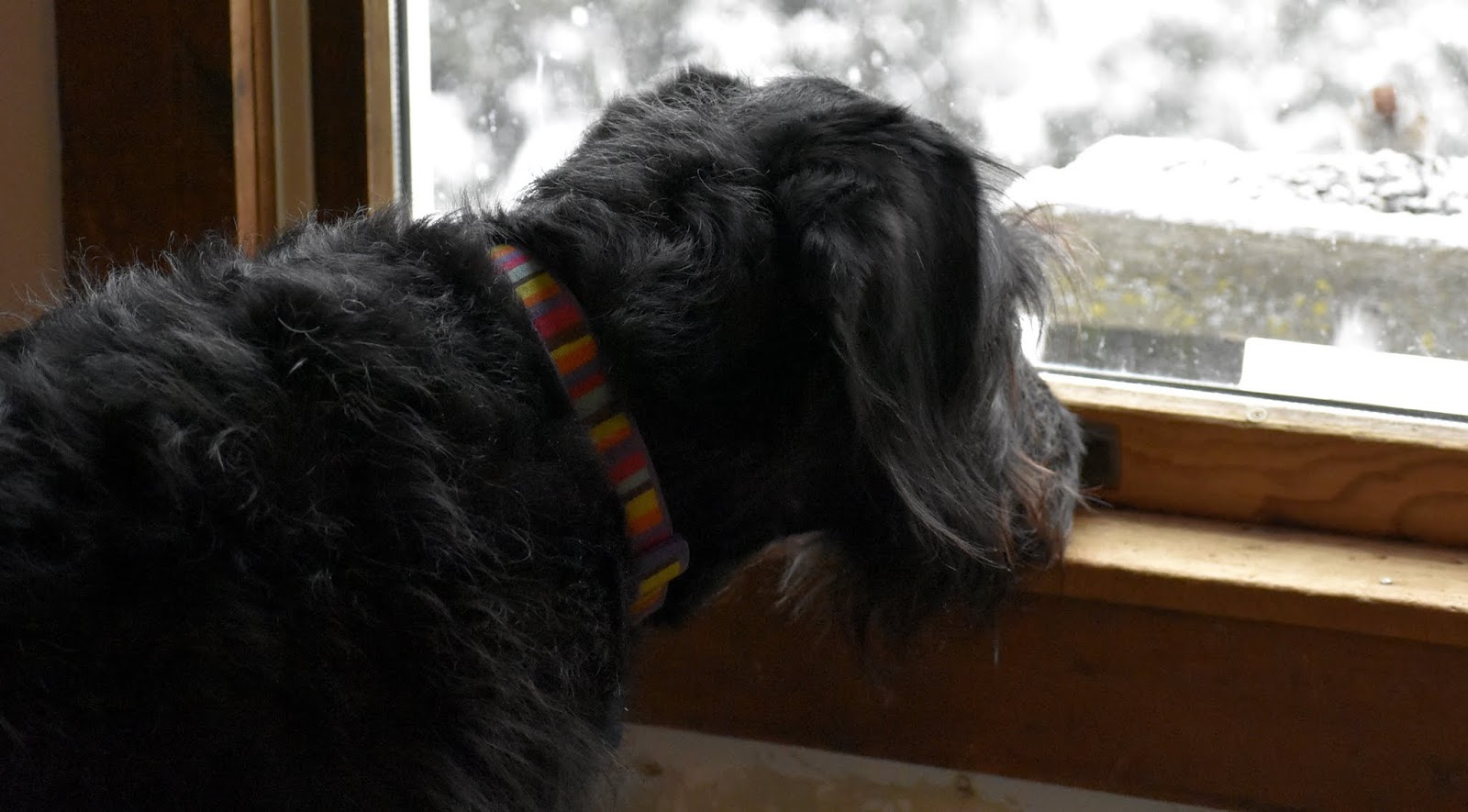
Cooper loved watching the birds.


The birds would crack open the seeds and the snow would often go flying from their beaks.


On the 25th, it was fun to watch a group of pheasants that have been hanging around our driveway. I put out cracked corn for them and they scratch just like chickens. The female (on the left) was doing a lot of scratching and finding corn. Then the male (on the right) came up to see what was there. You can tell she's annoyed that he's wanting to eat what she uncovered.


The male then started kicking up snow and looking for corn.


The pheasants spent time in the driveway and walked along the pathways I shoveled for them in the front yard. I can tell the pathways make it so much easier for them to get around safely and find food.


On the 25th, I saw a white-crowned sparrow. I was surprised to see it at this time of the year.


On the 26th, there were some robins in the apple tree eating the crabapples. I can't imagine that they taste good, but the robins were choosing to eat them versus coming to the feeder and eat seeds.


Our outdoor time made us ask (or wonder about)...why some dogs do well in the winter weather and snow, and other dogs struggle. Cooper is one of our dogs who loves the winter. He'll stick his head into the snow and look for activity near the grass. He reminds me of a fox looking for a rabbit or mouse.


In the garden, we are planning/planting/harvesting...nothing. It's hard to think of planting when the farm looks like this:


And icicles are coming off the roof:


They are really bad this year and we are going to have to hire someone to melt them so we don't get damage inside our home.


That being said, I am thinking that this year I will need to plant more flowers and get the backyard sodded since it is all torn up. Since we are planning on having Sophia's graduation party here, there will be a lot of work to do to make it look presentable. 

I added nature journal pages about...what I observe each day, the types of birds that I am seeing, and goals that I want to accomplish. I'm adding color to each of the pages which makes them look better than just the single-color illustrations that are in the nature journal now.


I am reading...
The Budget. It's an Amish-Mennonite newspaper and has reports from various communities throughout the country and world. It's interesting to read about how winter affects people, and how the weather this winter is significantly different than past years.


I am dreaming about…days when we aren't struggling to get through the snow. This year we have had a huge amount of snow and we literally are having difficulty finding a place to put it each time there is a new snowfall.


The pathways are narrow which makes it hard for the dogs to be able to run and explore when they go outside. The wind often is so strong that it blows the snow into the pathways, making for another outdoor time of shoveling to create paths.


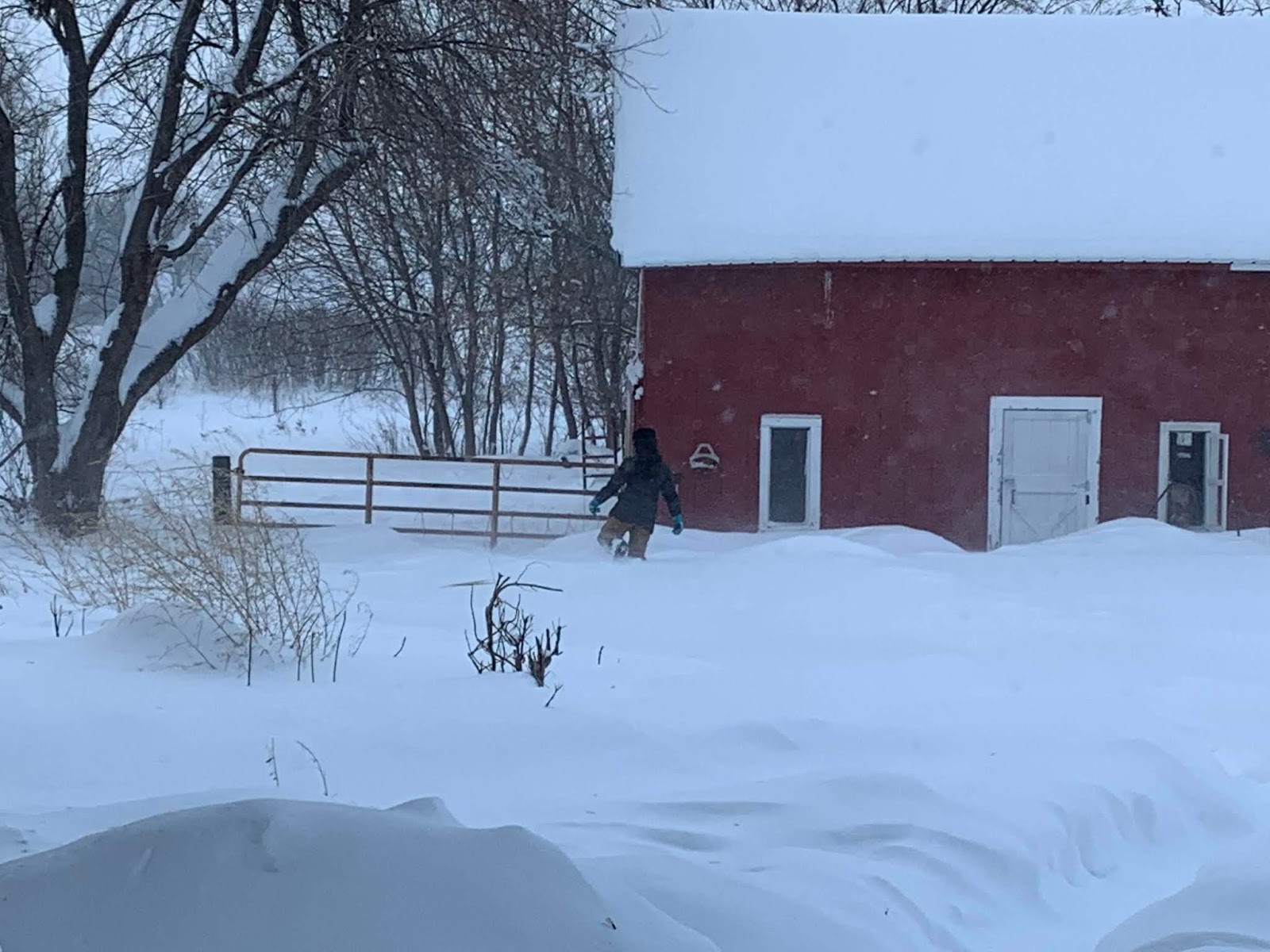
This is the view from the barn to the house. Next year I really need to make sure that the snowblower is working. It would make creating this path so much easier. The shoveling is a real back-breaker on some days - especially when the wind blows and packs down the snow.


A photo I would like to share...this male pheasant was finding some unusual spots to perch one day. He picked the electric wire - something I had never seen a pheasant do! He also was hanging out in the apple tree. His coloring helped him blend into the branches on the tree.


Sunday, June 10, 2018

Spring Chores...a Bit Delayed

Each year, there are things that we need to do in the Spring. These are both chores that make getting through spring much easier; and things that will help the wildlife and/or flora.

1. Spring cleaning and purging - inside the home as well as outdoor (hobby shed, barn, and tractor shed).

Well...this goal was a bit different than anticipated this year. We had a fire at our farm which destroyed the hobby shed and playhouse. So much for Spring cleaning and purging what we no longer need. That was done for us by the fire.


There was a demo crew that had a machine that picked up and put the charred remnants of the shed and playhouse into the dumpster.


It took two dumpsters to haul away everything. There's a bit more that needs to be removed from the shed and fire pit; and that will probably fit into one more dumpster. 


The fire also burned half of the front of the barn and half of one side of the barn.


A gentleman from the local Lions club came out to help with cleaning out all the water-soaked hay and straw from the barn. It was soaked because the firefighters saturated it with water so the fire that was already burning the barn wouldn't jump to the hay and straw and quickly ignite the entire barn. 


We pushed out all the damaged hay and straw out the loft door.


A few days later, the gentleman from the Lions club came back with his Bobcat and moved all the water-saturated hay and straw.


He moved it away from the barn to a new compost area.


We now have two compost piles going which will eventually be good for the plants and trees here.

I do need to clean out the feed room and the section of the barn that holds other items and tools. The little shed behind the barn also needs to be cleaned out still, but that isn't a top priority given what happened with the fire.

2. Muck out the barn.

On May 16th, we cleaned out one-third of the barn. The meant removing all the wood chips that the horses had used for bedding during the winter. Up until mid-April, the bedding was frozen since we had an abnormally cold and long winter. So, we were late this year with cleaning out the barn thoroughly.

The girls started cleaning the barn and removing everything down to the thick, rubber mats.


I - along with another gentleman from the local Lions club - worked on another section of the barn. After he left, I finished mucking out about half of the barn and putting down fresh bedding. On Memorial Day weekend, I finished the other half of the barn and put the rest of the bedding down. It is much better now.


When the Bobcat was here, all the used bedding was moved to our primary compost pile. 


There were many different piles were we put the used bedding when we were removing it from the barn. These were all cleaned up.


Afterwards, he smoothed out the area where the horses spend a lot of time. They didn't seem to mind the Bobcat moving around the pasture.


On Memorial Day weekend, I finished mucking out the barn. It felt great to get all the bedding out of the barn and to the compost pile. It looks (and smells) better now with fresh bedding.

3. Replace the numbers on the mailbox after they were damaged from the snow and then the heat from the fire.

The numbers were either missing or starting to peel off from the mailbox.


I replaced all the letters and numbers so they are affixed to the mailbox.


It looks so much better now.

4. Tune up/service the lawn tractor.

The last time that I was able to use the mower was in Fall 2016. Last year, at the start of the season, the mower didn't work. With the service technician I normally used no longer operating his own business, I was at a loss for how to fix the riding mower. So, I hired someone to mow our lawn.

A neighbor showed me how to check and/or charge the battery and it was fine. Yet, the mower didn't start. So, we finished out the 2017 season with someone else mowing the lawn.

This year, because of the fire, we had many Lions Club members helping. One asked about our lawn since he noticed the grass was long. He took the battery and checked it (it was fine); and then came back to look at the lawn mower.

He was able to fix it (a wire came out of the fuse and so it wasn't able to start). Because he knew how to splice wires and connect them, the mower was able to start up again. By the time I was able to mow our lawn for the first time this season, it looked like a hay field - with grass as tall as my knees in some areas.


In the photo below, Aspen is walking in an area I did the first cut through. It was still long, but not anything like the "hayfield" I was growing.


After I mowed it for the second time, it was a much more acceptable length. There was still a lot of grass laying in piles all over the lawn, so the girls and I raked up everything; and then hauled the cut grass to an area next to the driveway. In this way, the lawn has a chance now to get sun, water, and air; and the horses can't get to the cut grass which would make them sick (too much and too rich/high in sugar).

I should have taken a before and after picture. The lawn looks significantly better now that it is raked.

Now, the next step is to buy a weed trimmer (since ours burned in the fire) and do trimming.

5. Repair and/or replace the pasture fence.


Part of the pasture fence was damaged in the fire. There are sections that are missing and that we've had to use baling twine to string across to create a temporary fence. Thankfully, this section of the fence is just between the west pasture and the area by the barn. It's hard to tell where the fence was and where it needs to be fixed.


In another section, the wood posts were charred, so that length of fencing will all need to be repaired. We have t-posts and chicken wire up temporarily until the fence can be fixed. 


I'm looking forward to this Fall when things should look significantly better.

6. Prepare the garden beds - create new ones and build new raised beds.

This one doesn't look like much right now because it is the rose bed that burned in the fire. At least the weeds are removed.


There were perennials in this garden that I hoped would grow, but it looks like the fire was too hot for them to survive. Looks like new roses and perennials will need to be planted.

That being said, there were two roses that did come up which made me happy. These were ones that my Dad tended to for many years, and I took care of after he died and until my Mom died. I transplanted them here so we could continue to enjoy them.


The flower bed next to the roses is filled with yellow irises from my parents. They are doing well this year. I had transplanted them in October 2016. In 2017, they didn't do too well - just shot up some leaves. This year, however, they have been blooming for quite some time now which is great!


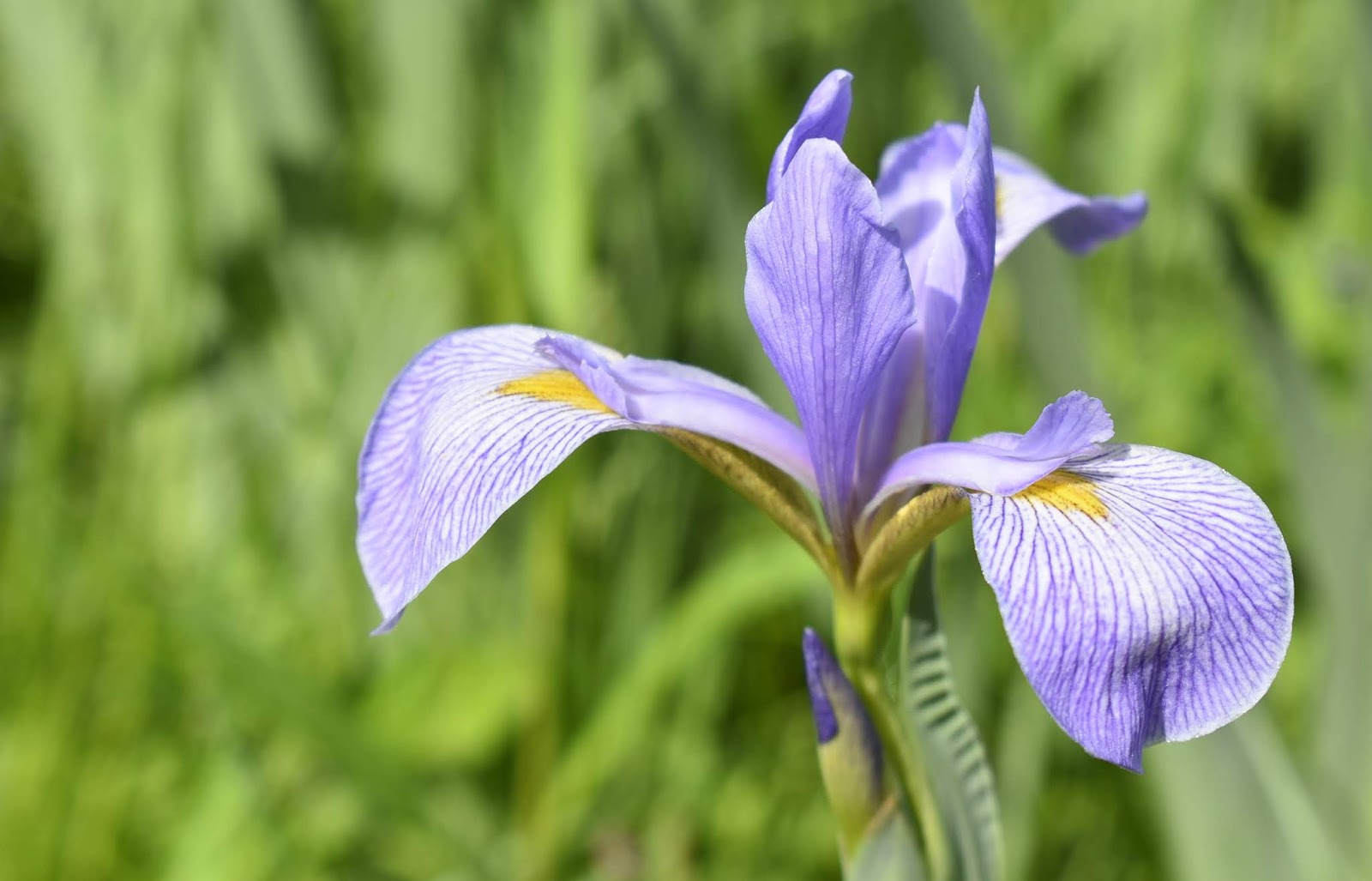
We have another type of wild iris that grows in the west pasture: Blue Flag Iris. These have been spreading and doing exceptionally well each year.


When we first moved here, I don't remember seeing any. Now, they are prolific. 

I am hoping to continue to work with different gardens around the front- and backyards. There are many and has not been enough time to work on them. Perhaps later this month I can make some progress on them.

Even so, there are some flowers coming up in the gardens - like wild columbine:


and tulips.


The peonies, wildflowers, and lilies (day and Asiatic) also are growing now.

7. Plant seeds or transplants.

I didn't take photos of planting the seeds or transplants because I was the only one who did it. There are four 4'x3' gardens that are planted with tomatoes (4 types), green peppers, jalapenos, about a dozen herbs, green beans (2 types), yellow beans, carrots (2 types), cucumbers, zucchini, and watermelon.

There were three gardens that were damaged in the fire, so I need to transplant the two rhubarb plants, and then find a place for all the dirt. The space where the gardens are now will be part of the driveway and entry to the new garage.

8. Clear out the fire pit and make it smaller.

When the Bobcat was here, we had the fire pit cleaned up. It was a big job because we've been using the same fire/burn pit since we moved here in 1995.


Needless to say, there were multiple loads that were removed and put with the rubble from the shed. We had hoped that it would be hauled away when the rubble was taken, but the demo crew needed another dumpster. 

I spent some time picking through the dirt and found broken glass, rusty nails/screws/metal, and other items that needed to go into the trash. We still have some more work with this area - picking up any more garbage, leveling it out, and then putting grass seed or sod on it. 

We won't be doing any more large-scale burning at this point in our lives. Even though the shed fire wasn't our fault and not a result of our burning, doing a large fire doesn't hold the same appeal it once did. Making a small fire pit that we can sit around and enjoy, and make some food over seems more relaxing.

9. Make repairs to any buildings damaged during the winter; and then paint them.

Because of the fire, we are starting from scratch for the shed-turned-garage. The barn, which also was damaged, will be power-washed once it is repaired and then painted. With new windows and doors on the front, loft doors fixed, and holes in the siding repaired, it should completely change the way the barn looks.

We hope that this project will be done by late-July or early-August.

10. Start splitting and stacking wood.

We will start on this project in the late-Summer or early-Fall when