Thursday, June 23, 2011

52 Books in 52 Weeks - Week 26 - All That Matters

For the 26th week of the 52 Books in 52 Weeks challenge, I chose All That Matters by Jan Goldstein.  I enjoyed this book; and read it in a couple of days.  Although it was rather predictable, it was a very moving story of the relationship between a granddaughter and grandmother. 


The story centers around a 23 year old suicidal woman (Jennifer) who finds happiness and purpose in life with the help of her grandmother, a Holocaust survivor.

At the beginning of the book, Jennifer thinks there is little to live for: her mother is dead, her Hollywood-producer father is busy with his picturesque new family, and her boyfriend has dropped her. She attempts to take her life, but ends up being released into the care of her grandmother, Gittel "Gabby" Zuckerman.

Gabby takes Jennifer back with her to New York with the hope of helping Jennifer.  It is not so much Jennifer's story that is fascinating, but rather Gabby's story of surviving the Holocaust that is the most engaging part of the book.

As the author notes at the beginning of the book, "When I was a young boy my father's first cousin, Fania Ingber, shared with me the story of how she survived the Nazis: hiding in the forest as a young girl and later in the attic of a righteous woman for two years.  Those details help form the character of Gabby.  Through her I humbly pay tribute to all the survivors, the Fanias of the world, each with his or her own indomitable spirit."

Keeping this in mind, when Gabby finally shares her story with Jennifer during a trip they take to Maine, it is captivating to read - even if it's fiction.  Gabby said that after witnessing her parents and sister murdered by the Nazis that she didn't have the will to live.  She was found wandering in the open by a woman who had frequented her father's shop (he was a tailor). 

The woman (Mrs. Pulaski) screamed at her, "'Foolish girl, don't you see it is not for you to throw away what your family was so desperate to have? You must choose life. You must live for those who had no choice."

She described how she hid in Mrs. Pulaski's attic: "During the day I would cling to the slanted walls.  This way my feet would not touch down on the floorboard." (This was important because Mrs. Pulaski was a seamstress who had customers who came to her home and any noise from the attic might alert others that she was hiding someone...a crime punishable by death.)

Gabby continued, "Hanging on, I would feel my knuckles turn white with pain. Many times they became so numb I could not feel them again for several hours."  She lived this way for a very long time as a teenager, and eventually broke down crying one night as Mrs. Pulaski comforted her. 

Mrs. Pulaski said, "There are times when it seems everything good in life has been taken from us...Now is such a time.  But I promise you, little one, if you open your eyes, your heart, you will find there are still gifts waiting for you each day."

She encouraged Gabby to try to find at least one good thing each day - a dream, a bright yellow butterfly sunning itself, a glimpse of sunlight through the crack in the roof, a memory of her mother's cooking, the sound of rain, and so forth.

After sharing her story with Jennifer, Gabby told her, "There is a gift waiting for you each day...If you're willing to see it, hear it, even feel it, it's there." 

It was on the trip to Maine that this story was shared.  In addition, Gabby and Jennifer visited several places that sounded interesting including the Norman Rockwell Museum. 

There were paintings there that were based on a speech given by President Franklin Roosevelt outlining the Four Freedoms to which every human being was entitled:
-> Freedom from want
-> Freedom of worship
-> Freedom of speech and expression
-> Freedom from fear

As I read (and re-read) these Four Freedoms, I thought of the last book I read (Another Place at the Table) which focused on the United States' foster care system, and the challenges that the children in it have faced in their young lives.  I thought that some of these core freedoms - freedom from fear, wants, speech/expression - were violated in many of the cases shared in that book. 

All That Matters is also the second book that I've recently read that encouraged one of the main characters to keep a journal.  Gabby gave Jennifer a journal and said, "The pages are empty. They wait for you to fill them, to tell about the gifts you will find each day....

"Maybe, when you are going through a difficult time - and such days are part of the challenge we get to face in living - you will take out this book and read what you have already written.  It will remind you that while there is darkness, you also have good, beauty, light, and rich memories to cling to."

Gabby writes a message to Jennifer in her journal: "To my greatest gift, my granddaughter - Listen for me in your heart, that is where I choose now to live...for that is my heaven. Love, Nana."

All That Matters is a story about the will to survive - on several different levels and with different characters.  It is a good reminder that each person has their own challenges...and, sometimes, the difficulties we face are small compared to ones others have had to deal with in their lives. 

The book also serves to underscore the importance of looking for at least one thing each day that is a gift...something positive that helps you get through the day.

Wednesday, June 22, 2011

Simple Woman's Daybook

FOR TODAY

Outside my window...it's still dark.  However, the first hint of morning is showing to the east where the sky is a lighter shade of indigo.

I am thinking...about the male goldfinch who kept trying to get into the house yesterday.  He kept flying to and grabbing onto the ledges by the living room and kitchen, and visited the family room and dining room windows as well.  The cats were fascinated by this bird who seemed equally as interested in them.  Wonder if he'll be back today.

I am thankful...that a respite worker is coming today for three hours. I need to have a few hours to get some things done; and I like knowing that Sophia and Olivia are having fun with Mary.  She's taught them how to play croquet; and they enjoy playing board games and being outside with her.

From the learning rooms...the girls are getting ready for the county fair and showing some projects they've been doing for 4-H.  They're also practicing their demonstrations (this will be the first year for both of them). Went to the zoo the other day and learned a lot about different animals and Japanese gardens/tea ceremonies (the zoo has a conseratory and Japanese garden which are both beautiful).

In the kitchen...we're going to be making fresh strawberry pie on Saturday which we're excited about.  Fresh strawberries are finally ready to be picked.  Making a few salads this week using lettuce and herbs from the garden; and trying some more beverages using fresh seasonal fruit (rhubarb and strawberries) combined with homemade lemonade.

I am wearing...a hooded sweatshirt and pajama shorts.  It's still early morning and no one is awake yet...except some of the cats.  The dogs went back to bed after going outside and having breakfast.

I am creating...a window star for a customer later on today.  Have been helping Sophia and Olivia with embroidery projects.  This year I haven't done as much embroidery and quilting as I did last year.  I want to start doing that again.

I am going...to the grocery store today to get some ingredients for food I'll be making for friends and family who will be visiting during the upcoming week.  Have 3 visits scheduled for the next week - two of which are with people I haven't seen for a long time.  Saw a friend who I've known since the late-1980s on Monday.  It's been nice re-connecting with people again.  Seems like a lot of time has been focused on caregiving and homeschooling recently.

I am wondering...how I'm going to get the yard and gardens looking more presentable before Saturday's guests and Monday's 4-H club tour (with one of the stops here).  Between cleaning the house and the rain, I haven't had as much time as I'd hoped to work on the gardens. 

I am reading...Another Place at the Table - A Story of Shattered Childhoods Redeemed by Love by Kathy Harrison which is an incredibly good book about a woman who was a foster parent to more than one hundred children.  Read 14 chapters yesterday morning...couldn't put the book down.  Will be starting another book this morning - All That Matters by Jan Goldstein.

I am hoping...that my back pain goes away today...or at least diminishes a bit.   

I am looking forward to...looking at pictures I took earlier this week.  I enjoy looking at pictures and remembering what I saw or experienced. 

I am hearing...Gretel (the dog) taking a deep breath. The fan. Quiet. Complete peacefulness. Birds singing outside...the wren already singing away at 5:20 a.m.

Around the house...everything is off the carpeted floors since I spent the majority of yesterday vacuuming all the floors and then deep-cleaning them with the carpet cleaner.  They look so much better this morning.  Almost don't want to put anything back down.

I am pondering...the impact that Alzheimer's has had on my dad over the past year.  I looked at some pictures yesterday from last summer and it's amazing the effect the disease has had on him in just one year.  I am so thankful that he still knew who I was on Father's Day...but there were some times when he looked at me with blank stares (which I've never seen him do until Sunday) that were quite sobering and sad.

One of my favorite things...watching the wildlife here.  Enjoyed watching the goldfinish yesterday; listening to the baby wrens chirp whenever one of the parent wrens brings in food; seeing the woodpecker at the hummingbird feeder; watching a robin take a bath in a big puddle in the driveway; and seeing a huge rabbit jump in the backyard and hop to the hostas under the apple tree.

A few plans for the rest of the week...getting ready for guests on Saturday, Monday, Tuesday, and Wednesday (each day are different people/groups of people).  Going to an event that celebrates summer at a local historical museum.

Here is picture for thought I am sharing...of one of the peonies that are blooming.  These are ones that have been here for well over 15 years.  The Chinese peonies (that I planted a few years ago) just started blooming this year.  They're a beautiful shade of red with yellow centers.

Pink Peony

To see other people who are participating in the Simple Woman's Daybook during June, please click HERE.

Monday, June 20, 2011

K is for Kitchen - ABCs of Homeschooling

On 5 Kids and a Dog, there's a series called the ABCs of Homeschooling.  This week's letter is "K." 

Alphabet ATC or ACEO Available - Needlefelted Letter K...is for Kitchen.

When I think of homeschooling, one of the places that we spend a considerable amount of time in is the kitchen.  The girls and I enjoy cooking and baking, so incorporating a culinary aspect into homeschooling is a natural fit.

The girls have been helping in the kitchen since they were about 18 months old.  As they have gotten older, the new skills they learn match their developmental and physical abilities. 

Both Sophia and Olivia will look at recipes as I'm planning meals for the upcoming few weeks.  When I'm doing this, they often will look at the pictures that accompany the recipe (the majority of my recipes come from cooking and women's magazines).  They'll see a picture of something that looks good and will ask if they can make it. 

Trying a new recipe, having it be a part of the meal, and seeing what it tastes like is something that makes the girls happy and proud.

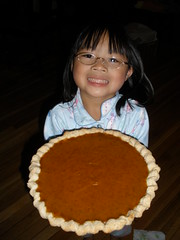
Olivia with Pumpkin Pie
Olivia holding a pumpkin pie she made.

During the past few years, I created an ABC Journey Around the World in which the girls learned about a different country in alphabetical order (e.g., Australia, Brazil, China, Denmark, Egypt, France, and so forth until ending with Yemen and Zambia). 

One of their favorite parts of learning about other countries was seeing what people would eat in different parts of the world.  I found recipes on the internet as well as through recipe books from the library. We tried anywhere from one to six recipes per country (some were easier to find recipes for than others).

Making Mexican Hot Chocolate
The girls made Mexican hot chocolate
using a recipe found in a children's cookbook.
They also made Mexican scrambled eggs
that morning for a complete breakfast.

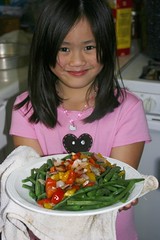
French Green Bean Recipe
Sophia is holding a green bean sidedish
using a French recipe. 

Olivia Making Swedish Rolls
Olivia is making Swedish cinnamon rolls.
The recipe came from a local church cookbook
that had a whole section on Swedish cooking
(we live in a community that was founded
by Swedish immigrants).

The kitchen is more than a place to cook and bake food.  With homeschooling, the kitchen also becomes an area to do science experiments and hands-on activities.

One of the science lessons that the girls did focused on marine life and pelicans. Apparently a pelican can hold 13 1/2 quarts of water in its pouch. The water drains out, leaving only the fish which the pelican then can swallow and eat.

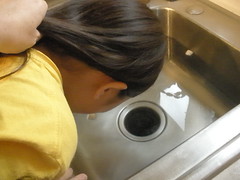
Sophia Being a Pelican
Sophia trying to catch a marshmallow
as part of a science lesson about pelicans.

In the photograph above, there are 2 marshmallows in the sink representing fish. Sophia's job is to catch the marshmallows. It's harder than it looks.

The girls learn best when they can make a hands-on, tangible connection with the subject about which they are learning.  This is so important when the concept might be more difficult for them (e.g., electricity) or would benefit from a visual example (e.g., lung capacity).

Lung Capacity Experiment
Olivia learning about lung capacity.
She took a deep breath and then blew air through the tube
that led into the water-filled 2-liter pop bottle.
The air would push out the water from the bottle
and show how much air was in her lungs.

Sometimes when we're cooking, the girls learn new words or make a connection between what they're cooking with something else they've heard or learned.  For example, when we were making cheese, the curds separated from the whey.  They immediately made the connection with the nursery rhyme they had heard many times:

Little Miss Muffet sat on a tuffet
Eating her curds and whey,
Along came a spider,
Who sat down beside her
And frightened Miss Muffet away.

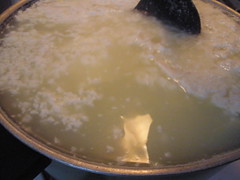
Cheesemaking - Curds Separating from Whey
Learning to make cheese.  In the process,
the girls saw the curds and whey separate; and
made the connection of a nursery rhyme they heard.
(The curds are the white part; the whey is the liquid.)

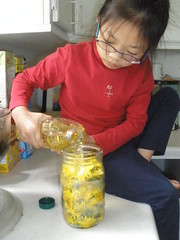
For one nature study, we focused on learning about dandelions.  In addition to the science part of the study, we added a culinary component where we made dandelion cookies, dandelion vinegar, and dandelion oil/salve.

Making Dandelion Oil for Salve
Olivia making dandelion oil.
The oil can be used as a base to make salve.

The kitchen also is a place where the girls create things for the holidays and different seasons. 

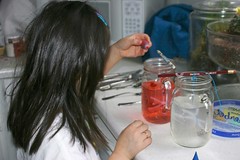
Borax Snowflake - Step 3 - Sophia
Sophia making borax snowflakes.

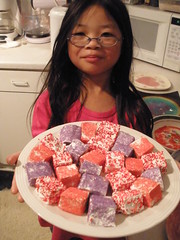
Homemade Marshallows for Valentine's Day
Olivia holding homemade marshmallows
she made for Valentine's Day.

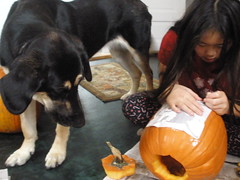
Gretel Waiting for Pumpkin Guts
Sophina carving a pumpkin while Gretel looks on.

An important part of our time in the kitchen is when we make food to help others.  We have made many meals and desserts for people experiencing medical/health challenges; and have chosen to donate some of our food to those in need. 

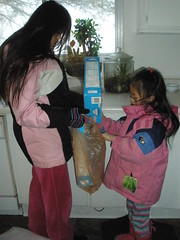
Cereal to Donate
The girls packaging up some of food to donate
to an organization that serves people who are homeless.


We also make food for animals - treats for the dogs, cats, and horses; and for wildlife.  Making food for the hummingbirds to drink during the summer and suet for the birds during the winter are regular activities. 

Sophia Helping Make Bird Suet on a 25 Degree Below Zero Day
Sophia making suet for the birds on a
very cold 25 degree BELOW zero day.
Needless to say, the birds needed the energy
and were constantly eating the homemade suet.

Seeing how excited the animals are to get a treat...and to see the variety of birds that now visit the feeders is a lot of fun.  Being able to observe animals up close (especially birds) is such a highlight of homeschooling.
So many subjects are covered in the kitchen beyond home economics - reading, math, science, community service, and geography. The kitchen truly is one of the centers of learning for homeschooling...and one of our favorite places to learn! 

Sunday, June 19, 2011

Kid-Friendly Summer Recipes + Link Your Recipes


Welcome to the third time of our Fun in the Summer Sun event!

Each Monday until September 7th
Mama to 4 Blessings along with Harvest Moon By Hand,
Adventures of Mommydom, Sweet Diva, and Sweet Phenomena
will be hosting Fun in the Summer Fun link up events.
Here's the line up:
1st Monday of each month: link up your "Kid-friendly summer activities"
2nd Monday of each month: link up your "Kid-friendly summer crafts"
3rd Monday of each month: link up your "Kid-friendly summer recipes"
4th Monday of each month: link up your "How to stay cool in the summer heat"

*~*~*~*~*~*~*

The girls and I enjoy cooking and baking; trying new recipes; and making up our own recipes.  During June, we've been making food using herbs and fruit from the garden. 

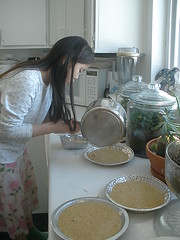
Homemade Pizza Using Fresh Herbs from the Garden

One of our favorite dinners during the summer is homemade pizza.  Each person gets some dough to make their own individual pizza using their preferred toppings. 

The pizza dough recipe came from the June 2006 issue of Better Homes and Gardens and is the easiest one I've found.  There are extra steps in the original recipe (like letting the dough rest), but I skip them just to save some time.

Pizza Dough

2 3/4- 3 1/4 cups all-purpose flour
1 package active dry yeast
1/2 teaspoon salt
1 cup warm water (120-130 degrees F)
2 tablespoons oil or olive oil

In a large mixing bowl, combine 1 1/4 cups of the flour, yeast, and salt.  Add warm water and oil.  Beat with an electric mixer on low speed for 30 seconds, scraping the bowl constantly.  Beat on high for 3 minutes.  Using a wooden spoon stir in as much of the remaining flour as you can. 

Turn the dough out onto a lightly-floured surface.  Knead in remaining flour to make a moderately stiff dough that is smooth and elastic (6-8 minutes total).  Divide dough into 8 pieces.  Cover and let rest for 10 minutes.  Makes 8 mini-pizzas. 

(Note: I mix everything by hand; and do not cover and let it rest for 10 minutes.)

The girls pressing out the dough.

Add whatever topping you prefer.  On this night, we had onions, mushrooms, sun-dried tomatoes, and fresh herbs from the garden (rosemary, oregano, and basil) as well as cheese (regular and dairy-free).

Some other ideas from Better Homes and Gardens
- Meats: precooked ground beef or Italian sausage, sliced pepperoni, chopped or shredded chicken, sliced or chopped ham
- Vegetables: fresh tomatoes, sweet peppers, olives
- Cheeses:  mozzarella cheese (shredded or fresh), shredded or grated Parmesan cheese, crumbled feta cheese
- Garlic:  minced or coarsely chopped

Bake in a 425 degree oven for 15 minutes.

The recipe makes a lot of pizza -
enough for dinner with leftovers for another meal.

One of these nights, I'm going to try making the pizza on the grill and see what that tastes like. Perhaps the next time we make the pizza we'll do this...along with adding vegetables that are ripe from our garden (like tomatoes, peppers, and onions).

*~*~*~*~*~*~*~*~*~*~*~*~*~*~*

Strawberry Patch Float

The girls adding sprinkles to the top of their floats.

This recipe comes from the Taste of Home June/July 2011 issue. 

Ingredients

2 tablespoons strawberry jam (we used homemade jam we made last year)
1 teaspoon water
Strawberry ice cream (we used both strawberry and vanilla ice cream)
Sliced strawberries (we used frozen strawberries that we picked last year since local ones aren't quite ready to be harvested yet)
1/4 cup cream (we didn't include this)
Strawberry or raspberry sparkling water
Whipped cream
Sprinkles

Directions

Spoon the jam mixed with water into a tall glass.  Top with ice cream, strawberries, cream, sparkling water, whipped cream, and sprinkles.  Enjoy! 

They enjoyed their floats and
wanted to know if they could have another one tomorrow.

*~*~*~*~*~*~*~*~*~*~*~*~*~*~*

Pretty Herbal and Fruit Ice Cubes

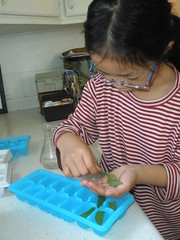
In an issue of Better Homes & Gardens, there was an idea for making pretty ice cubes.  Simply place cleaned whole mint leaves or lemon rind curls (or both) inside each compartment of your ice cub tray.  Fill with water, then freeze until solid (about two hours). 

Olivia Making Mint Ice Cubes
Olivia placing part of a mint leaf
in each ice cube compartment.

To use, drop a few of the flavored cubes into a beverage of your choice (e.g., lemonade, iced tea).  As the cubes melt, the drink gets a bit more flavor from the herbs or citrus fruits.

*~*~*~*~*~*~*~*~*~*~*~*~*~*~*

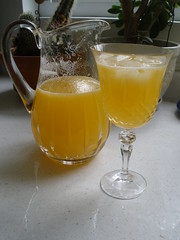
Orange-Ade

Fresh Orange-ade
Orange-ade

Oranges and lemons don't grow in Minnesota, so this doesn't quite fit with making food from our garden.  However, this is a recipe Sophia and I created based on the one that my grandma use to make when I visited her as a child. I remember her hand-squeezing the lemons and oranges, and sitting on her porch relaxing while the breeze came through the windows. 

This is what Sophia and I made, and it is as close to my grandma's recipe as I remember:

3 cups freshly-squeezed orange juice
1 1/2 cups freshly-squeezed lemon juice
4 cups of cold water
1 cup of sugar (start at 1/2 cup and continue adding sugar until you like the taste)

Squeeze the juice out of the oranges and lemons (we used about six each, and had enough leftover juice to make another batch of orange-ade).

Sophia Juicing Lemons
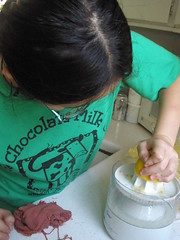
Sophia getting the juice out of a lemon.

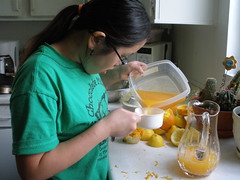
Measure the juices and then pour them into a pitcher.

Measuring Orange Juice
Measuring the freshly-squeezed orange juice.

Add the water to the pitcher.  Gradually add sugar and stir until it is dissolved.  Refrigerate and serve chilled...or use the pretty ice cubes you made (see recipe above) to add a hint of mint to the orange-ade. 

Now it's your turn!
What are some of your favorite recipes for summer?


Saturday, June 18, 2011

52 Books in 52 Weeks -- Week 25 -- Another Place at the Table

For the 25th week in the 52 Books in 52 Weeks challenge, I'm reading Another Place at the Table - A Story of Shattered Childhoods Redeemed by Love by Kathy Harrison. 


Kathy's Harrison's memoir of her life as a foster parent to over one hundred children for more than a decade is at times sad, heart-wrenching, and (thankfully) funny.  It provides a very real picture of the foster care system and some of the children in it. 

Harrison is an ordinary woman doing heroic work. She is honest about her own failures and weaknesses, about the difficulty in fostering troubled children, about the shortcomings of the foster care system, and about the tremendous need each child in that system has for a loving, attentive family.

The children who came to her were the offspring of addicts and prostitutes; the daughters and sons of abusers; and teenage parents who cannot handle parenthood.

Another Place at the Table paints an accurate portrayal of the foster care system and the challenges within it.  As one social worker wrote in a review of the book, "This book should be mandatory reading for anyone interested in becoming a foster parent. Having been a social worker in the foster care system for many years, I appreciate Kathy's frank presentation of some of the most difficult issues that any foster parent may face."

She continues, "Some people go into fostering with a rosy picture of helping an innocent, angelic child, and those people are setting themselves up to fail. Kathy presents a realistic picture of the ups and downs of fostering, the good and the bad, that is definitely not for the faint of heart but is a true depiction of the feelings and constitution that it takes to bring wounded children into your home. I couldn't put it down."

This book is definitely not "light" or "easy" reading.  It is, however, an inspiring book about the life of Kathy Harrison and the incredible impact she has made on the lives of children so desperately needing a parent and family who wanted to care for them.

52 Weeks of Giving - Weeks 24 - Donate Books to "Books For Africa"

For the 24th week of giving, Sophia and Olivia picked out and sent books to Books For Africa.  According to the Books For Africa website:

"...We believe that education is the great equalizer in the world, and books are at the foundation of a strong educational system. For many children in Africa, the gift of books truly is a gift of hope.


"Access to an education is one of the only opportunities young people have to end the cycle of poverty and attain a better quality of life than previous generations. Books For Africa works to help children who otherwise would not attend school by supplying educational materials to reduce or eliminate education costs.

"Wars, economic crises, poverty, malnutrition, and illiteracy plague many areas of Africa. According to the United States Agency for International Development (USAID), 40 percent of school-age children in Africa do not attend school. Forty-six million African children have never set foot in a classroom.

"Most African children who attend school have never owned a book of their own. In many classrooms, 10-20 students share one textbook. Many people in the United States take these educational necessities for granted, but children in Africa cherish books.


"Books For Africa supplies sea containers of books to rural school libraries, orphanages, adult literacy programs, and community resource centers. Books For Africa strives to help create a culture of literacy and provide the tools of empowerment to the next generation of parents, teachers, and leaders in Africa."

After learning about Books For Africa, the girls picked out some books that they wanted to send the children. 

Sophia and Olivia packaging books
they want to donate to Books For Africa. 
They had picked more books to donate, but
they were copyrighted more than 15 years ago. 
It's too bad...many of the older, classic books that the girls have enjoyed
have such wonderful stories and lessons.

They needed to follow these guidelines about books that Books For Africa accepts:

•15 years old or newer popular fiction and nonfiction reading books (soft and hard cover).
•1995 or newer publish date primary, secondary, and college textbooks (soft and hard cover).
•1995 or newer reference books such as encyclopedias and dictionaries.
•1995 or newer publish date medical, nursing, IT, and law books.
•Bibles are sent when requested by African recipients.
•School/office supplies—paper, pencils, pens, wall charts, maps, etc.

Acceptable books are gently used and relevant to an African reader.

Books For Africa does NOT accept:

•Magazines or journals or any kind.
•Home decorating, wedding, or cookbooks.
•Ethnocentric books, such as the biography of Abraham Lincoln or the history of Ohio.
•Foreign language books except for French books. French novels and dictionaries are welcome.
•American history or civics.
•Music books for K–12.

The girls put the books in a box and did not include any packing materials such as newspaper, plastic wrap, and peanuts (as requested by Books For Africa).

They mailed them to:

Books For Africa
715 Minnehaha Avenue East
St Paul, MN 55130
There also is an address in Georgia that accepts books.  People can drop off books in person if they don't want to mail them. 

There are more details about shipping or dropping off books at their website.

Tutorial: Homemade Catnip Toys

Many years ago we planted catnip in the garden.  This year, we have an abundance of it so we have been giving the cats fresh, organic catnip (which they enjoy) and drying it.  Sophia also has been hand-embroidering catnip toys for one of her 4-H projects. 

Making your own catnip toys is a great way to be resourceful by using leftover felt scraps as well as use extra catnip.  It also is keeps cats healthy and active since they run and play with the toys.  Healthy cats mean less trips to the veterinarian...another cost savings!

Here's how to make homemade catnip toys:

STEP ONE: GROW AND HARVEST CATNIP

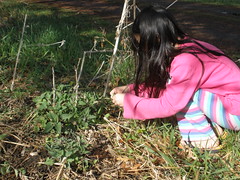
Olivia Picking Catnip
Olivia picking some catnip early in the season.
The catnip plant is now at least 1.5' tall.

From one small plant purchased at a garden center many years ago, this has paid for itself many times over.  Each year, the plant comes up and does well on its own. 

This year, there were two other catnip plants that came up in different areas of the garden, so we transplanted them.  Initially, they were wilted and didn't look like they would make it.  Within a week, they were doing quite well.

Sometimes we pick the leaves off, and other times (if the catnip has grown a lot), we will cut it back by taking down the several inches of leaves and stems. 

STEP TWO: DRY THE CATNIP LEAVES

Drying Catnip
Sophia placing the catnip leaves
on a dehydrator tray.

We have a basic five-tray dehydrator that we use to dry catnip.  Simply place the the leave around each tray in a single layer and with a bit of room around each leaf. Catnip dries quickly - usually in less than a day.

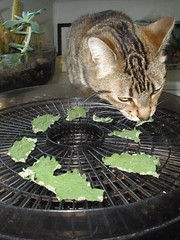
Wanting the Catnip
Lucy taking a dried catnip leaf
before it can be used in a toy.

Remove the dried leaves and place in an air-tight container.  Make sure the leaves are completely dry or else they won't last.  Keep them whole at this point. Don't crush them.

STEP THREE: SEW THE TOY - LEAVING OPEN A SMALL HOLE

There are free patterns on the internet that you can use to make cat toys.  Sophia used the bird pattern HERE. She also used a children's craft book that has patterns in it for small toys. 

Rather than purchasing anything new, she used scraps of felt that were on hand.  Felted wool sweaters also work well for cat toys.

Follow the directions for making the toy, making sure to leave a small opening for the catnip and stuffing.

Placing crushed catnip leaves
into the toy.

Crush a few catnip leaves, and then place them into the toy. 

STEP FOUR: FINISH SEWING THE TOY

Add some wool stuffing, and then finish stitching the cat toy.

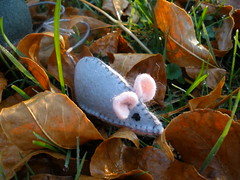
Light Gray Mouse - Bring Stories and Rhymes Alive, Nature Table Accessory, or Play Toy
Cat toy in the shape of a mouse.

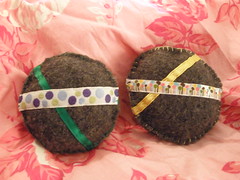
Wool Felt Cat Toys
Cat toys made from a felted wool sweater
and ribbon.

STEP FIVE: WATCH THE CATS PLAY WITH THE CATNIP TOY

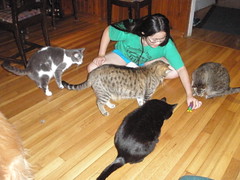
The cats were around Sophia while she made the toys for them.  Needles to say, when she was done and they had a chance to play with the toys, they were so happy. 

Playing with a Catnip Toy
Sophia showing the cats the embroidered
catnip bird she made for them.

They batted the toys around, picked them up and carried them, and tossed them in the air. They were entertained with the toys and we were entertained watching them.


Friday, June 17, 2011

Exploring Yemen and Zambia Through Food

For the past few years, Sophia and Olivia have been learning about different countries around the world alphabetically.  We started with Australia, Brazil, and China; and now have ended with Yemen and Zambia. 

I thought it would be good for them to learn more about the world beyond the United States, so I picked a different country to study for each letter of the alphabet.  (Since there is no country that begins we "X," I picked Mexico for that letter.)

One of the girls' favorite ways to learn about other countries is through food.  I found recipes for each of the countries we studied, we shopped for the ingredients, prepared the food, and then ate what we made. 

Sometimes the food was incredibly good, and we all wanted to make the recipe again.  Other times...well...let's just say that those were educational and culinary experiences.

This month we finished this multi-year world geography unit study by focusing on Yemen and Zambia.  Each had food that we would definitely make again.

YEMEN

I couldn't find many recipes for Yemen on the internet.  However, I did find one for Yemenite Eggplant Salad. 

There is one ingredient in the Eggplant Salad, zhoug, which has many of the same ingredients as salsa (e.g., cilantro, chilies, garlic).  Zhoug's base isn't tomatoes (like it is with salsa), but one of the main ingredients in Yemenite Eggplant Salad is tomatoes, so it was a less expensive and readily-available substitute.

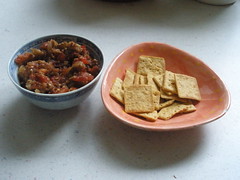
Yemenite Eggplant Salad
Yemenite Eggplant Salad with Wheat Crackers

Although the recipe calls it a salad, it looks more like a dip.  So, we placed some of the salad on the wheat crackers instead. 

The eggplant salad is very spicy.  Sophia and I liked it, but Olivia can't even handle mild salsa, so this would have been way too spicy for her to enjoy.  She did taste a little, though; and then was barely able to utter "HOT!" before following it with quite a bit of water.  With one tablespoon of black pepper...it certainly was hot.

Yemenite Eggplant Salad

1 pound eggplant
1 cup chopped tomato
1/2 cup tomato puree, fresh or canned
1 teaspoon minced garlic
1 tablespoon freshly ground black pepper
1/2 teaspoon salt
1 teaspoon zhoug, or the milder condiment, shatta (we used salsa instead)

Preheat the oven to 400 F.

Bake the eggplant until it is very soft, about 35 minutes. Peel and cool. mash the eggplant pulp and mix with the chopped tomato. Add the rest of the ingredients and mix well.

ZAMBIA

Moving from the Middle East to Africa, we came to Zambia.  One of the recipes we tried, both the girls would enjoy having again (uchi bars); one I liked (sweet potato snacks); and one was an interesting experience with trying a new food (fried plantains).
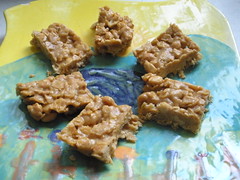
Uchi Bars from Zambia


Uchi (Honey) Bars

1/2 cup sugar
3/4 cup Zambia Gold honey
1 cup peanut butter
3-4 cups cornflakes (or your choice of cereal)
1 cup nuts

Melt sugar and honey together on the stove until sugar is completely dissolved. Take off heat and mix peanut butter into the mixture. Gradually add the nuts and cereal, alternating, until all dry ingredients are thoroughly mixed. Spread the mixture into a greased 9 1/2 x 11 inch pan and place in the refrigerator until hard.

Note: Although this recipe came from a Zambian website, I think it was promoting its Zambian Gold honey...so this may not be totally representative of Zambian food.

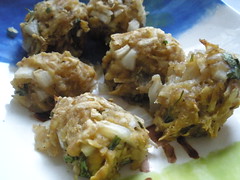
Sweet Potato Snacks from Zambia


Sweet Potato Snacks

2 sweet potatoes
1/2 an onion, chopped into small pieces
Wheat flour, just enough to bind the rest of the ingredients together
Chilies (we didn't use chilies since we wanted Olivia to try it)
Coriander (cilantro) leaves (I used about a handful)
Salt (not much...just to add a bit of flavor)

Peel sweet potatoes and grate or cut into very thin slices (Sophia grated them). Chop coriander leaves, onions and chilies fine. Add salt, coriander leaves, onion, chilies and a little flour to sweet potatoes and mix well. Shape into small round balls and deep-fry in oil. Serve warm.

Note:  To make the sweet potato balls healthier, we baked them in a 400 degree oven until they were cooked through and the potato part was soft.

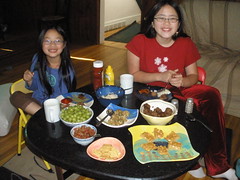
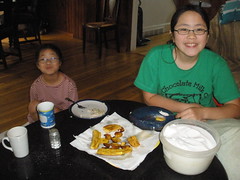
Meal with Food from Yemen and Zambia


Fried Plantains

Oil
Plantains, one per serving (plantains can be cooked while they are unripened and green)
Salt or African Hot Sauce

Peel and cut plantains, either into thin slices, or slice each plantain in half and cut each half lengthwise.

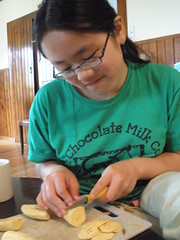
Cutting a Plantain
Sophia slicing a plantain. 
Although they look like a big banana,
they are quite hard and
have no flavor when we tasted it raw.

Heat the oil in a pan or skillet on the stove top. Add plantains (in a single layer) and fry until golden.

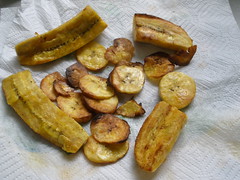
Fried Plantains from Zambia
Fried plantains.
We all liked the thin slices versus longer halves.
The thinner the slice, the more they tasted like potato chips.
The slices tasted like french fries.


Trying Zambian Plantains
The girls trying fried plantains.
We tried it first with sugar (no one liked that).
Then we tried them with salt (much better).
They tasted like french fries and potato chips.

Thursday, June 16, 2011

Handmade Party Buntings and Garlands

One of the Etsy teams I'm on is EtsyKids.  Each month there is a challenge, and for June it is "Party!" It's all about fun, sparkle, confetti, buntings, games, and cupcakes.  By going to Etsy and using the search code EKchallengejun11 you'll see a wide variety of party items.  Here's the LINK that will take you directly to all the items that were made.

I chose to make a Fourth of July bunting (also known as a garland) for the challenge.  I've seen quite a few on the internet and thought I'd try my hand at making one. 

4th of July Fabric Bunting
Available here:

In addition to the bunting for the challenge, I also made a blue one for Olivia to use for her upcoming half-birthday in July.

Two buntings: one for Olivia's half birthday;
and one for the 4th of July.

Buntings are a great way to use up fabric on hand or reuse fabric.  I've seen some buntings that are single sided and cut with a pinking shears.  However, they can only be viewed from one side.  I chose to sew two pieces of fabric together for each flag, so the bunting looks nice from each side.

Because the sides are finished, the bunting can be machine-washed and ironed. The fabric won't fray since there are no raw edges.

When making or purchasing a bunting, most people choose by favorite color or pattern; coordinate with their home design; or match with their party/special event theme.  Custom buntings can be made (either by oneself or by hiring someone who can sew).  Imagine a bunting for a child's birthday or graduation made from her/his clothes throughout the years.  What a special - and meaningful - decoration to celebrate a milestone. 

Buntings are reusable, eco-friendly decorations - both for festive celebrations as well as everyday decor for walls, windows, or rooms.  Rather than using decorations that are disposable and end up in a landfill, using decorations that can be used year after year is good for the environment...and is something that children (and parents) look forward to bringing out and using each year.   

What are some handmade decorations that you've made...or that you remember your parents using when you were a child?

Monday, June 13, 2011

J is for Joy - ABCs of Homeschooling

On 5 Kids and a Dog, there's a series called the ABCs of Homeschooling.  This week's letter is "J." 

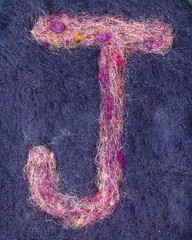
Alphabet ATC or ACEO Available - Needlefelted Letter J ....is for Joy


It is the supreme art of the teacher to awaken joy
in creative expression and knowledge.
~~ Albert Einstein ~~

As I look at pictures of homeschooling, joy is a word that comes to mind. It is most often expressed when we're doing hands-on activities and bringing to life what we learn through reading about different subjects. 

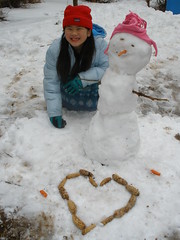
Sometimes, joy comes from the girls making connections on their own.  For example, Sophia was having fun building a snowman and making a pinecone heart near it one day during the winter.  She was so happy with how both turned out. 

She put birdseed in the snowman's hat so the birds had another feeder to visit. She left carrots on the ground for the rabbits or deer.

Sophia with Snowman Bird Feeder and Pinecone Heart
Sophia with the snowman and pinecone heart she made
inspired by the book Stranger in the Woods.

She told me after she made the snowman that she was thinking about the book, Stranger in the Woods as she was making the snowman. It's interesting to see how Sophia and Olivia both are inspired by books that I read to them as part of homeschooling, and how that translates into their play and learning.

I also see joy in the girls' faces when they are doing something they love to do and at which they feel skilled.  Olivia has always enjoyed coloring and could spend the majority of her days coloring (that...or coloring and doing puzzles). 

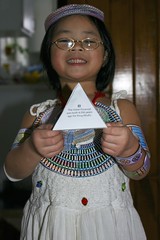
Olivia with Egyptian Pyramid
Olivia showing jewelry she colored
and was wearing as part of the Egyptian unit study.

In the photo above, Olivia is holding a paper pyramid that has facts about pyramids on each side. She also is wearing paper jewelry she colored.  These weren't projects that were displayed in the house or worn after multiple times.  Rather, she put them on and wanted to show what she did - and she radiated joy. 

After she was done, she took off the jewelry and carefully put it in her Egypt 3-ring binder in a protective sheet holder.  In that way, every time she looks at it, it can remind her of how much she enjoyed coloring at that point in her life.

Another time that the girls are joyful is when we spend time cooking and baking together...and then sampling what we made. 

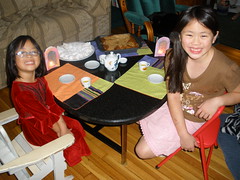
Tea Party with Hungarian Treats
Having a tea party with food made
as part of the geography unit study about Hungary.

The girls and I have made foods that we enjoyed (like cookies and coffeecake as shown in the picture above).  Likewise, we've also made some food that none of us would like to eat again (Ukrainian sauerkraut and Welsh Oatcakes).  

Whether or not we enjoyed the food, the experience of cooking together brought us all a lot of joy and happpiness.  We were sharing time and creating special memories that we all can enjoy looking back upon.

Having opportunities to play and creatively express oneself are important parts of homeschooling as well.  Playing, pretending, and dramatic expression all foster creativity and being able to think independently...rather than having someone tell you what to do and when to do it. 

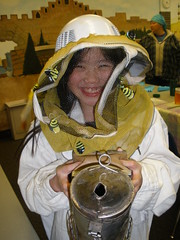
Sophia Ready to Start Beekeeping
Sophia was pretending to be a beekeeper after
learning about bees, beekeeping, and honey
during a home economics lesson.

Being able to exercise together and be outdoors always makes us happy.  Joy is often shown with huge smiles and laughter, especially when we're riding bikes; playing badminton or croquet in the backyard; or walking the dogs or horses.

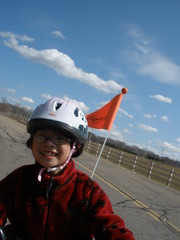
Olivia Riding Behind Me
Olivia riding her bike on a beautiful spring day.
Her bike is actually attached to mine (a tag-a-long bike),
thus the odd angle of this photo.

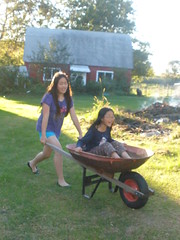
Living in the country on a small hobby farm means the wheelbarrow is used at least once each week...if not more often.  Many times, Sophia gives Olivia rides in the wheelbarrow.  No matter where you are here, you can hear Olivia laughing as she's bumped and jostled on the rides.

In addition to having fun, the wheelbarrow rides are good for their bodies.  Both girls have sensory integration dysfunction (aka sensory processing disorder), so pushing a heavy load (for Sophia) and getting input from the ride (for Olivia) help address some of the needs that their bodies have because of SID.

Having Fun in the Wheelbarrow
The girls having fun in the backyard.

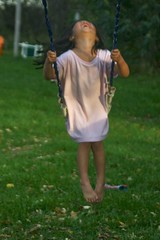
Since the girls were infants, they have enjoyed swinging.  When they were under a year old, they would be pushed and would fall asleep while the wind blew, birds sang, and sun gently warmed them.  They were so content and at peace while swinging...a more quiet form of joy.
Olivia Swinging
Olivia in a moment of pure joy
while swinging!

Swinging each day when it's not raining or well below zero with bone-chilling winds, is both relaxing and exhilarating for the girls...often at the same time.  When they have too much energy and can't focus on learning, taking some time to go on the swings helps get some of the energy out.  In the process, they are laughing and joking, and having a wonderful time.  They come in awhile later ready to begin homeschooling again.
Homeschooling is about joy.  And when I think about joy -- about happiness -- I think of spending time together; creating memories; and learning about new things and gaining new skills. 

Joy is present each day we homeschool.  I know that because I hear it through laughter; and see it through smiles and love shown to one another.
 
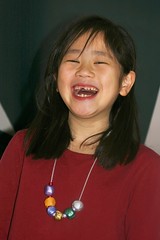
Nez Perce - Beaded Necklace
Sophia wearing a beaded necklace she made
during a unit study about the Nez Perce during the 1700s.
Hearing joy expressed through laughter
is what homeschooling represents.

Your success and happiness lies in you.
Resolve to keep happy; and
your joy and you shall form an invincible host against difficulties.
~~ Helen Keller ~~